Overview
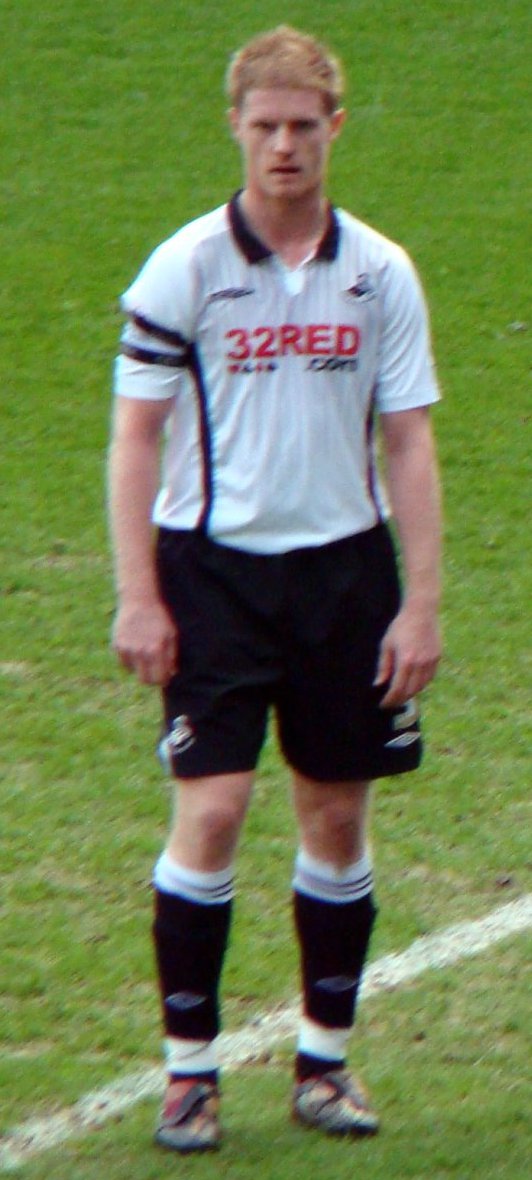
Alan Tate is an English former professional footballer, born on September 2, 1982, in Easington. Standing at 1.85 m, Tate established himself as a versatile defender throughout his career, capable of playing across the back line, though he was most frequently deployed as a right-back or centre-back. He is perhaps best known for his long and impactful association with Swansea City, where he became a fan favourite and a key component of the team that ascended from League One to the Premier League.
Position
Tate primarily operated as a defender, showcasing an ability to adapt to different roles within the defensive unit. His physical attributes and commitment allowed him to perform effectively as a right-back, where his defensive solidity was valued, and as a central defender, where his aerial prowess and organizational skills came to the fore. This adaptability made him a valuable asset to his managers, offering tactical flexibility.
Identity
Alan Tate's playing identity was characterized by his unwavering commitment, defensive resilience, and leadership. He was known for his strong tackling, tenacious work rate, and a willingness to put his body on the line for the team. These traits, coupled with his longevity and integral role in Swansea City's success, cemented his reputation as a reliable and influential figure on the pitch.
Career path
Alan Tate's football journey began in the youth ranks before embarking on a senior career that saw him become a cult hero at Swansea City. His progression through various clubs, often on loan, helped shape him into the experienced defender he became.
Manchester United Youth & Senior Debut
Tate started his career in the acclaimed academy system of Manchester United. He progressed through the youth ranks, making his senior debut for the club in 2002. However, opportunities at the first team were limited given the strength of the squad at the time. To gain senior experience, Tate embarked on a series of loan spells.
Loan Spells & Transition
Between 2002 and 2004, Tate had loan periods at Royal Antwerp, Burnley, and Oldha Athletic. These experiences in different leagues and environments provided him with crucial first-team football and exposure to the demands of professional senior play. His time at Burnley in the 2003-04 season, for instance, saw him make 10 appearances in the Championship, as documented by Transfermarkt.
Swansea City Tenure
In 2004, Tate made a permanent move to Swansea City, a decision that would define the majority of his career. He initially joined on a season-long loan before making the switch permanent in 2004. Over the next decade, Tate became an indispensable part of the Swansea squad, experiencing multiple promotions. He was instrumental in their rise from League One to the Championship, and eventually to the Premier League in 2011, as detailed on Wikipedia's entry for Alan Tate. During his time at Swansea, he made over 300 appearances across all competitions, a testament to his consistency and importance to the club.
Later Career & Retirement
After his long spell at Swansea, Tate had further loan moves to Leeds United, Yeovil Town, and Aberdeen. He then joined Crewe Alexandra in 2014 before moving to Port Vale in 2015. His playing career concluded in 2016, after which he transitioned into coaching roles, notably returning to Swansea City in various capacities.
Playing style
Alan Tate's playing style was rooted in his defensive principles and physical attributes, making him a reliable presence in the backline. As a defender, his primary focus was on preventing opposition attacks, a role he executed with conviction and tactical awareness.
Defensive Attributes
Tate was known for his strong tackling and ability to read the game, often intercepting passes and breaking up play before it reached dangerous areas. His commitment in one-on-one situations was a hallmark of his game, frequently winning duels against opposing forwards. He possessed good positional sense, which allowed him to cover spaces effectively and organize the defense around him. When deployed at right-back, he maintained a disciplined defensive shape, prioritizing stability over expansive attacking runs.
Aerial Prowess and Leadership
Standing at 1.85 m, Tate was a strong presence in the air, particularly valuable in central defense. He excelled at clearing crosses and defending set pieces, contributing significantly to his team's defensive solidity. Beyond his physical attributes, Tate was recognized for his leadership qualities on the pitch. He was vocal, often directing teammates and demonstrating a strong will to win, which resonated with fans and fellow players alike.
Distribution
While not primarily known for expansive passing, Tate was capable of effective short and medium-range distribution. He typically opted for safe, accurate passes to retain possession and initiate attacks, rather than attempting overly ambitious long balls. His focus was on maintaining defensive shape and ensuring the ball was moved cleanly to midfielders, allowing more technically gifted players to dictate play. In terms of defensive output, statistics from sources like FBref for his later career highlight his consistent volume of clearances and blocks, underscoring his primary role as a robust and no-nonsense defender.
Achievements & honours
Alan Tate's career was marked by significant team success, particularly during his long and influential spell at Swansea City. He was an integral part of a transformative period for the club, contributing to their ascent through the English football league system.
His most notable achievements include:
| Honour | Club | Year(s) |
|---|---|---|
| Football League One Play-offs | Swansea City | 2006 |
| Football League Championship | Swansea City | 2007-08 |
| Championship Play-offs | Swansea City | 2011 |
| League Cup | Swansea City | 2013 |
Tate's role in Swansea City's promotion to the Premier League in 2011 was a career highlight, culminating in their victory in the Championship Play-off Final. He also played a part in the club's historic League Cup triumph in 2013, which saw Swansea lift their first major trophy and qualify for European competition. While individual awards were less frequent for a defender of his style, his consistent performances and leadership were widely recognized by fans and teammates, solidifying his status as a club legend at Swansea City.
International career
Alan Tate did not feature for the senior England national team during his professional career. While he progressed through the youth ranks at Manchester United, his club career, though successful at various levels, did not lead to recognition at the highest international stage for England. Many players with extensive club careers in the English leagues, particularly those primarily focused on defensive solidity rather than attacking flair, often find competition for national team places to be exceptionally high.
England's national team, under various managers during Tate's active playing years, typically drew from players competing at the very top of the Premier League and other major European leagues. Although Tate was a key player in Swansea City's rise to the Premier League and their subsequent success, he did not earn any senior international caps for England. His focus remained on his club duties, where he was a consistent performer and a vital part of Swansea's defensive unit. The absence of international caps is not uncommon for many professional footballers who enjoy long and successful club careers but face intense competition for national team selection.
What makes Alan Tate stand out
Alan Tate stood out primarily due to his unwavering commitment and his embodiment of the fighting spirit that defined Swansea City's rise through the divisions. His resilience and leadership qualities were evident in every match he played, making him a central figure in key moments of the club's history.
One distinctive trait was his versatility across the defensive line. Whether deployed as a right-back, centre-back, or even as a defensive midfielder, Tate consistently delivered performances characterized by strong tackling and intelligent positioning. He was not the most technically gifted player, but his tactical discipline and sheer will to win compensated for it, providing a bedrock for more expressive teammates. His long tenure and integral role in Swansea's journey from League One to the Premier League and a major trophy cemented his status as a true club legend. He was the kind of player managers could always rely on, offering stability and a robust presence.
"Alan was a warrior for us, always put his body on the line. He understood what it meant to play for Swansea."