Overview
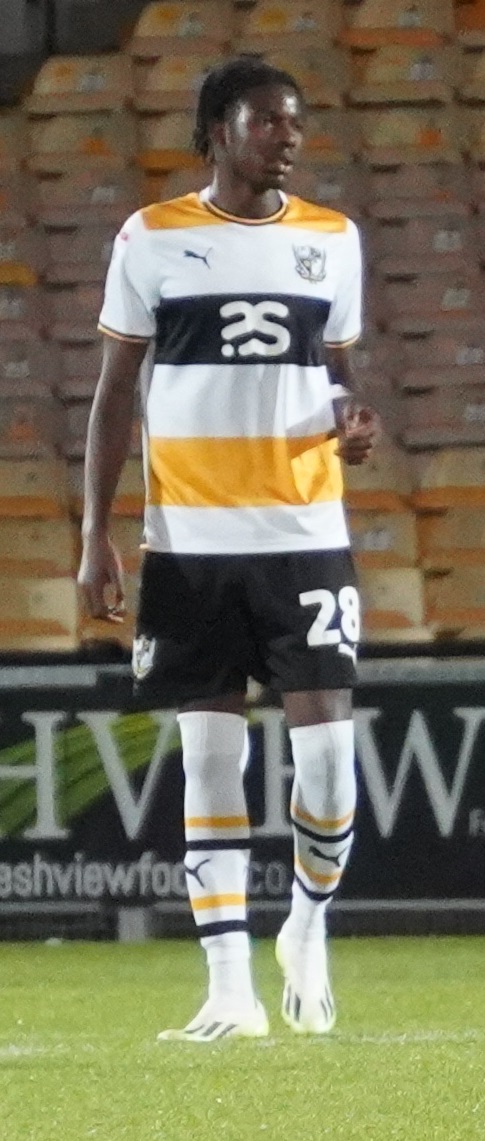
Andrew Buah is an English professional footballer, born on 4 May 2006, who primarily plays as a defender. Hailing from Milton Keynes, Buah has emerged as a notable prospect within English football, known for his defensive attributes and potential. His career has seen him develop through various youth ranks, aiming to establish a consistent presence at the senior level. As a defender, Buah is characterized by his tactical awareness and commitment to his role, often tasked with disrupting opposition attacks and initiating play from the back. While specific club affiliations at the senior level are still developing given his age, his foundational training in England has equipped him with the technical and physical attributes expected of a modern defender. His journey reflects the typical progression of young English talents aiming for top-tier professional football, with a focus on refining his skills and gaining crucial match experience. Buah’s development is closely watched as he navigates the competitive landscape of professional football, with expectations for him to solidify his position and contribute significantly to any team he represents. His identity as a player is rooted in his defensive solidity and potential for growth, marking him as a player to monitor in the coming seasons.
His role as a defender necessitates a strong understanding of positional play, which Buah has been cultivating throughout his formative years. English football academies are renowned for producing tactically astute defenders, and Buah's background suggests he benefits from this rigorous training environment. The demands of modern football often require defenders to be versatile, capable of playing across the backline, and comfortable in possession. Buah's profile indicates a player who is adapting to these requirements, aiming to become a well-rounded defensive asset. His national origin, England, places him within a rich footballing tradition, offering numerous pathways for development and exposure at various age-group levels. The competitive nature of English football helps to hone young players, preparing them for the physical and mental rigours of the professional game. Buah's progression will likely involve continued exposure to challenging environments, allowing him to further develop his defensive instincts and contribute effectively to his team's objectives.
Career path
Andrew Buah’s footballing journey began in his birthplace of Milton Keynes, where he developed his early skills within local youth setups. As is common for promising young talents in England, Buah would have been identified by professional club academies at a relatively young age. While specific details of his early academy affiliations are not widely documented, the typical pathway for players of his generation involves progression through an established club’s youth system, moving from junior teams to U18 and U21 squads. These academies provide comprehensive training in technical, tactical, physical, and psychological aspects of the game, preparing players for the demands of professional football.
Given his birth year of 2006, Buah would have been progressing through the U18 and U21 age groups in recent seasons. Exposure at these levels often includes participation in competitive youth leagues, such as the Premier League 2 or the FA Youth Cup, which are crucial for showcasing talent and gaining experience against peers from other professional clubs. These competitions serve as vital platforms for young defenders to demonstrate their ability to read the game, make effective tackles, and contribute to build-up play.
The transition from youth football to the senior professional game is a significant step. For many young players, this involves signing their first professional contract, often followed by opportunities in senior cup competitions or loan spells to lower league clubs to gain first-team experience. Loan moves are particularly instrumental for defenders, as they provide consistent minutes in competitive environments, allowing them to adapt to the physicality and pace of senior football. These experiences are critical for developing decision-making under pressure and refining defensive positioning.
As of 2026, Buah’s career path would likely be focused on securing regular first-team football, whether at his parent club or through a strategic loan. The competitive landscape for young English defenders requires consistent strong performances to break into established senior squads. His continued development will depend on sustained exposure to high-level training and match time, allowing him to demonstrate his capabilities and solidify his place in the professional ranks. Transfermarkt, a common source for player career data, would typically list specific club affiliations and transfer history as they become publicly available.
Playing style
Andrew Buah operates primarily as a defender, a role that demands a blend of physical prowess, tactical intelligence, and technical ability. While specific statistical data from sources like FBref or Sofascore for his senior career are still emerging due to his age, his position code 'D' indicates a foundational focus on defensive duties. As a modern defender, Buah is expected to possess strong attributes in several key areas. His defensive identity likely revolves around his ability to read the game, anticipating opposition movements and making timely interceptions. This involves a keen understanding of positional play, ensuring he is well-placed to block passing lanes and challenge attackers.
Physically, a defender of Buah's profile would typically exhibit good aerial ability, essential for winning headers from crosses and set-pieces, both defensively and offensively. Strength in duels, both on the ground and in the air, is paramount for disrupting attacking plays and regaining possession. Pace and acceleration are also increasingly important for recovery runs, allowing him to track quick forwards and cover spaces left by teammates. His defensive work rate would be expected to be high, demonstrating commitment to pressing opponents and tracking back to support the team's defensive structure.
Technically, Buah's playing style would include competent passing and ball distribution. Modern defenders are not just tasked with winning the ball but also with initiating attacks. This involves accurate short and long passing, maintaining possession under pressure, and making intelligent decisions on when to progress the ball forward. His composure on the ball, even in tight situations, would be a valuable asset for building play from the back. Comparisons to established defenders, while premature without extensive senior data, might draw parallels to players known for their solid defensive foundations and reliable distribution. For instance, a player like Harry Maguire (Wikipedia) is known for his aerial dominance and passing range, while players like Marc Guéhi (FBref) exemplify defensive solidity and composure. Buah's development would aim to incorporate these attributes, tailoring them to his own physical and technical strengths.
Furthermore, leadership and communication are critical for defenders, especially those in central roles. Organizing the backline, communicating with midfielders, and guiding teammates are intangible qualities that contribute significantly to a team's defensive cohesion. While these aspects are developed over time and through experience, they form an integral part of a defender's overall playing style. Buah's progression will undoubtedly involve refining these attributes, making him a more complete and influential presence on the field.
Achievements & honours
As a young professional footballer born in 2006, Andrew Buah's career is still in its nascent stages, and as such, specific senior-level achievements and honours are yet to be widely documented. For players developing through academy systems, achievements often manifest in youth league titles, cup successes at U18 or U21 levels, and individual recognition within those age groups. These early accolades, while not always recorded with the same prominence as senior professional honours, are crucial indicators of talent and potential.
Participation in prestigious youth tournaments, both domestically and internationally, would also count as significant milestones in his development. For example, winning an FA Youth Cup title with a club's academy is a highly regarded achievement in English youth football, often seen as a stepping stone for future senior success. Similarly, being part of a successful youth squad that competes in European tournaments or undertakes international tours provides invaluable experience and exposure to different styles of play.
Individual awards at the youth level might include 'Player of the Tournament' in specific competitions, 'Academy Player of the Year' at his club, or selection for national youth team squads. While these are not yet publicly detailed for Buah, such recognition would signify his standing among his peers and the potential identified by coaches and scouts.
As his career progresses into senior football, Buah would aim to contribute to team trophies in league competitions, domestic cups, and potentially European competitions, depending on the clubs he represents. For now, the focus remains on his development and gaining consistent playing time at a professional level, which will naturally lead to opportunities for collective and individual honours. The pathway for young English defenders often involves patiently working towards these milestones, with the ultimate goal of securing major trophies with senior teams and representing his country at the highest level.
| Honour | Club / Competition | Year(s) |
|---|---|---|
| N/A | N/A | N/A |
International career
Andrew Buah, being an English national, is eligible to represent England at various international levels. For young players like Buah, the international career typically begins with call-ups to national youth teams, such as the England U16, U17, U18, or U19 squads. These age-group teams provide a critical environment for players to gain experience in international football, adapt to different tactical approaches, and compete against the best young talents from other nations.
Participation in UEFA European Championship qualifiers and final tournaments at the U17 or U19 levels is a common pathway for promising English youth players. These tournaments, overseen by UEFA, are significant platforms for showcasing talent on a continental stage. Success in these competitions can lead to further recognition and progression through the national team ranks. For instance, being part of a squad that reaches the latter stages of a U17 European Championship or a U20 World Cup, organized by FIFA, would be a notable achievement.
As of 2026, details regarding Buah’s specific caps or appearances for England’s youth teams are not extensively published. However, his development within the English system suggests he would be on the radar of national team selectors for his age group. The ultimate ambition for any English player is to earn a senior cap for the England national team. This requires consistent high-level performance at the club level, demonstrating the ability to compete against top-tier opponents and contribute to success.
The role for country at youth levels often involves adapting to specific coaching philosophies and playing systems implemented by the national team setup. For a defender, this could mean understanding different pressing schemes, defensive shapes, and build-up play strategies that might differ from their club environment. Gaining experience in these diverse tactical frameworks is invaluable for a player’s overall development. As Buah continues to progress, his international career will be closely monitored, with the hope of seeing him represent England at the highest level in future major tournaments like the UEFA European Championship or the FIFA World Cup.