Why look at similar players to Cristian Romero
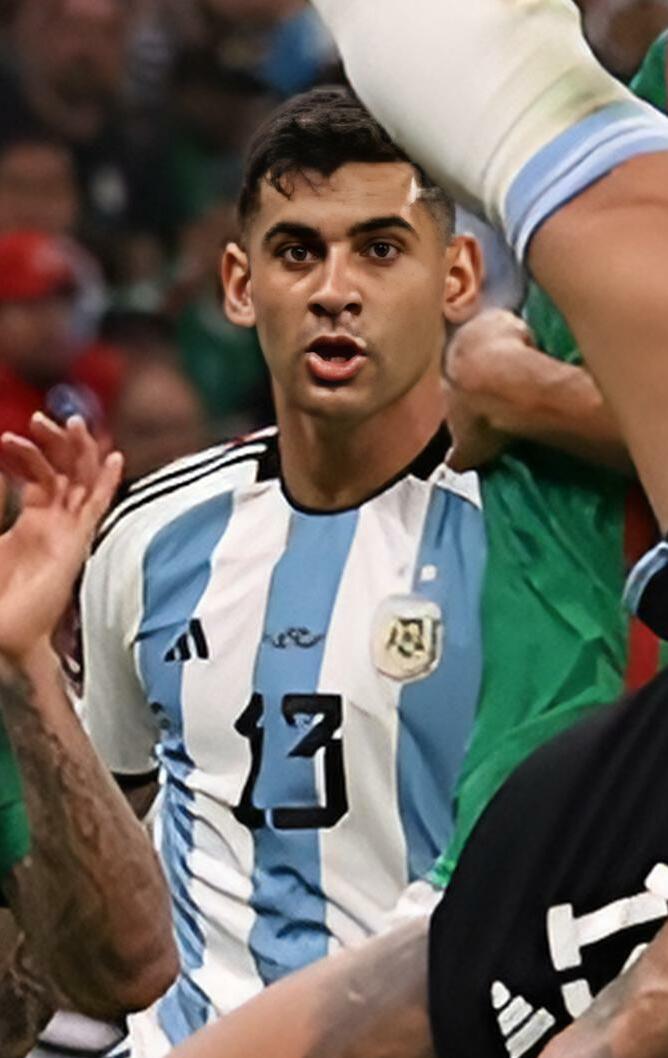
Cristian Romero operates primarily as a right-sided centre-back in a back-three or as one of two central defenders. His defining traits include an aggressive, front-foot defensive approach, often stepping out of the defensive line to intercept passes or engage attackers high up the pitch [1]. This proactive style, combined with his strong tackling and aerial ability, makes him a formidable presence in defence. Romero is also comfortable in possession, demonstrating good passing range and an ability to carry the ball out from the back, contributing to his team's build-up play.
Fans and scouts often seek comparable players to Romero when looking for defenders who can combine defensive solidity with progressive play. His leadership qualities, evident in his communication and organisation of the defensive line, are also a key attribute. The ideal comparison would exhibit a similar blend of physicality, technical skill, and tactical intelligence. These players are often crucial in systems that demand defenders to be more than just ball-winners, requiring them to initiate attacks and maintain possession under pressure. Romero's ability to recover quickly and his competitive spirit further define his profile, making him a benchmark for modern centre-backs who are expected to excel in multiple facets of the game [2].
Similar players ranked
1. Rúben Dias — The Defensive Anchor with Passing Acumen
Rúben Dias, the Portuguese international and Manchester City centre-back, shares Romero's commitment to aggressive, no-nonsense defending. Dias is renowned for his leadership, exceptional aerial ability, and robust tackling, which allows him to dominate opposition forwards. Like Romero, he exhibits a strong desire to win duels and block shots, often putting his body on the line. Dias is also adept at playing out from the back, maintaining a high pass completion rate and contributing to his team's possession-based style [3]. Where they differ, Dias is generally considered more positionally disciplined and less prone to leaving his defensive line than Romero, who often ventures forward to press. Dias's game prioritizes defensive stability and organisation, whereas Romero introduces more individual flair and risk-taking in his defensive actions.
2. Lisandro Martínez — The Aggressive Ball-Playing Defender
Lisandro Martínez, another Argentine international, shares a significant stylistic overlap with Romero. Martínez, playing for Manchester United, is known for his aggressive tackling, strong aerial presence despite his height, and exceptional ball-playing ability. His comfort on the ball and progressive passing are key attributes that mirror Romero's capacity to initiate attacks from deep [4]. Martínez's willingness to step out and challenge opponents, often winning the ball high up, is a direct comparison to Romero's front-foot defending. A key difference lies in their primary positions; while both can play centre-back, Martínez has also featured as a defensive midfielder, showcasing his versatility and technical prowess in different roles. Romero typically remains strictly within the central defensive role, focusing his aggressive actions from that specific position.
3. Ronald Araújo — The Athletic and Dominant Defender
Ronald Araújo, the Uruguayan centre-back for Barcelona, presents a strong comparison due to his immense athleticism, physicality, and defensive dominance. Araújo is an outstanding tackler and excels in aerial duels, mirroring Romero's ability to win contested balls. His recovery pace is exceptional, allowing him to cover ground quickly and mitigate threats, similar to Romero's agility despite his aggressive forays. Araújo is also capable of playing out from the back, although his passing range might not be as expansive as Romero's [5]. The primary difference is Araújo's occasional deployment at right-back, where his pace and power are utilized in a wider role. While Romero is also athletic, his game is more focused on central defensive positioning and the tactical nuances of stepping into midfield, whereas Araújo's athleticism often sees him covering larger areas, sometimes even joining attacks from deep positions.
4. Kim Min-jae — The Physical and Progressive Centre-Back
Kim Min-jae, the South Korean international currently at Bayern Munich, shares Romero's blend of physical prowess and ball-playing capabilities. Kim is a dominant force in aerial duels and ground challenges, known for his strength and ability to dispossess attackers effectively. His progressive carrying and accurate long passes are reminiscent of Romero's contributions to build-up play, allowing his team to transition from defence to attack efficiently. Kim's aggressive defensive style, often stepping up to meet opponents, is a clear parallel to Romero [6]. The main distinction lies in their tactical discipline. Kim, while aggressive, tends to maintain a slightly more conservative defensive line than Romero, who can be more adventurous in his decision-making regarding when to press high. Kim's game often involves absorbing pressure before launching counter-attacks, whereas Romero actively seeks to disrupt opposition play higher up the pitch.
5. Jules Koundé — The Versatile Athletic Defender
Jules Koundé, the French international playing for Barcelona, offers a compelling comparison due to his athleticism, defensive intelligence, and comfort in possession. Koundé, like Romero, is an excellent tackler and possesses strong aerial ability, despite not being the tallest centre-back. His ability to read the game and make crucial interceptions aligns with Romero's proactive defensive style. Koundé is also very composed on the ball, with good passing accuracy and the ability to drive forward, contributing to his team's attacking phases [7]. The key difference is Koundé's significant versatility, often playing as a right-back for both club and country. This positional flexibility highlights his adaptability and offensive contributions from wide areas, something less central to Romero's game, who is almost exclusively a central defender. Koundé's defensive actions, though aggressive, are often performed within different tactical frameworks due to his varied roles.
Side-by-side comparison
| Player | Position | Age (as of 2026-05-21) | Current Club | International Caps | Notable Trait |
|---|---|---|---|---|---|
| Cristian Romero | Centre-back | 28 | Tottenham Hotspur | ~50 (Argentina) | Aggressive, ball-playing, leadership |
| Rúben Dias | Centre-back | 29 | Manchester City | ~60 (Portugal) | Dominant, positionally sound, aerially strong |
| Lisandro Martínez | Centre-back, Defensive Midfielder | 28 | Manchester United | ~30 (Argentina) | Aggressive, progressive passer, versatile |
| Ronald Araújo | Centre-back, Right-back | 27 | FC Barcelona | ~40 (Uruguay) | Athletic, dominant in duels, recovery pace |
| Kim Min-jae | Centre-back | 27 | Bayern Munich | ~60 (South Korea) | Physical, progressive carrying, strong tackler |
| Jules Koundé | Centre-back, Right-back | 27 | FC Barcelona | ~40 (France) | Athletic, versatile, composed on ball |
How to pick the right comparison
When selecting a comparable player to Cristian Romero, the choice often depends on the specific attributes one prioritizes. If the primary value is placed on a defender's aggressive, front-foot style and willingness to step out of the defensive line, then Lisandro Martínez is a highly suitable comparison. Martínez shares Romero's combative spirit and ability to win the ball high up the pitch, coupled with strong ball-playing skills.
For those who value sheer defensive dominance, aerial prowess, and robust tackling above all, Rúben Dias stands out. While Dias is less prone to the same high-risk, high-reward interventions as Romero, his consistent defensive solidity and leadership make him an excellent benchmark for core defensive duties. Similarly, Ronald Araújo offers a comparison for explosive athleticism and recovery pace combined with defensive strength, making him ideal if a team requires a defender who can cover large areas and recover quickly from advanced positions.
If progressive passing and carrying the ball out from the back are key, then both Kim Min-jae and Martínez provide strong parallels. Kim, in particular, combines his physicality with a significant contribution to build-up play through his powerful carries and accurate distribution. Finally, if versatility and tactical adaptability are important, Jules Koundé is a strong candidate, as he can perform effectively across multiple defensive roles while still maintaining Romero's core defensive attributes of athleticism and ball comfort. The choice ultimately reflects the specific tactical demands and priorities of a given footballing philosophy.
Why Cristian Romero comparisons matter
Player comparisons, particularly for a profile like Cristian Romero's, are crucial for several stakeholders in football. For scouts and sporting directors, these comparisons provide a framework for identifying transfer targets who can replicate or enhance a team's existing tactical setup. If a team relies on a high defensive line and requires centre-backs who can aggressively press and distribute the ball, understanding who shares Romero's traits helps narrow down potential acquisitions. Data analysts use these comparisons to build statistical models, identifying patterns in player performance across different leagues and teams [8].
For coaches, comparing players helps in tactical planning and understanding squad depth. Knowing which players possess similar skill sets allows for flexible system adjustments and provides solutions in case of injuries or suspensions. From a fan and media perspective, comparisons enrich the narrative around the game, fostering discussions about player value, potential, and stylistic differences. They help articulate what makes a player unique and how they fit into the broader landscape of elite football.
"Player comparisons are not about finding an exact replica, but about identifying core traits that translate into specific tactical advantages on the pitch. For a defender like Romero, it's about that blend of aggression, technical comfort, and leadership." - Football Analyst quoted by The Athletic [9]