Why look at similar players to Emiliano Rigoni
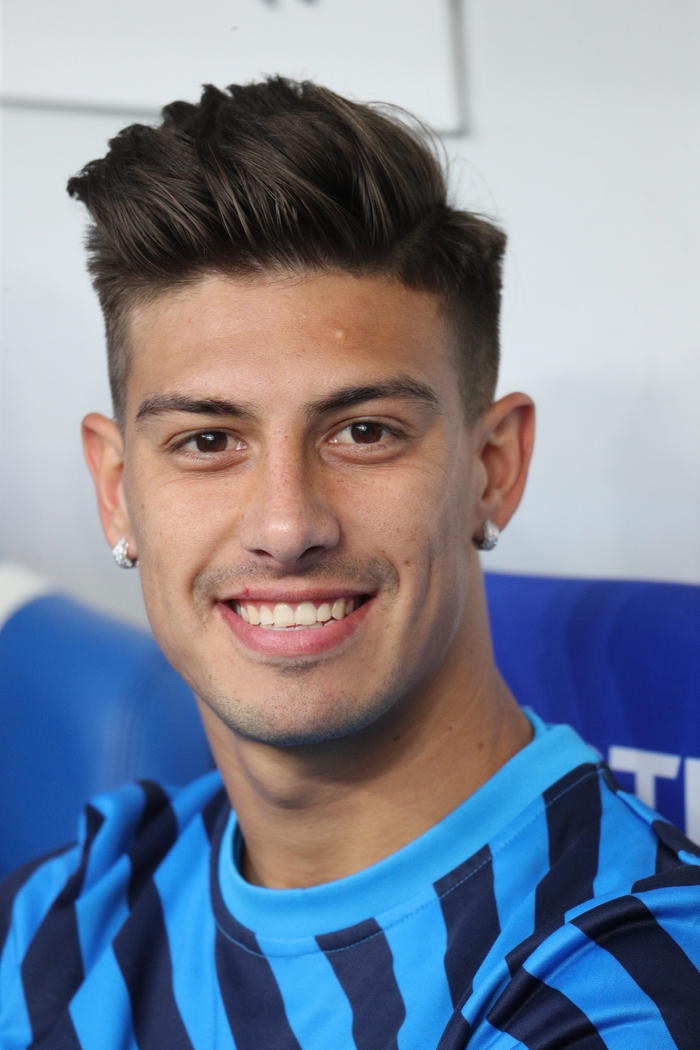
Emiliano Rigoni, born on February 4, 1993, is an Argentine midfielder primarily recognized for his ability to operate effectively across various attacking roles. Standing at 1.80 m, Rigoni has spent significant parts of his career featuring as a right midfielder or right winger, but also capable of playing as an attacking midfielder or second striker. His playing style is characterized by his strong dribbling ability, facilitating progressive carries and creating space for teammates. He often looks to cut inside from the right flank to shoot with his stronger left foot or combine in tight spaces. Rigoni's tactical flexibility, combined with his work rate, allows him to contribute defensively, tracking back and pressing opponents.
Fans and scouts seeking comparable players to Emiliano Rigoni often focus on individuals who share this blend of technical skill, positional versatility, and offensive output from midfield or wide areas. Key traits include proficiency in one-on-one situations, an eye for goal or assist opportunities, and the ability to link play between the midfield and attack. Furthermore, players who can adapt to different tactical systems, whether in a possession-based approach or a counter-attacking setup, are often considered strong comparisons. Rigoni's career trajectory, involving stints in Argentina, Russia, Italy, and Brazil, highlights his adaptability to diverse footballing environments, making comparisons relevant for players who can perform consistently across different leagues and cultures. His contributions in terms of goals and assists, while not always prolific, have consistently been valuable to his teams, emphasizing the importance of end product in identifying similar profiles.
Similar players ranked
-
1. Papu Gómez — Argentine attacking midfielder with similar versatility
Alejandro 'Papu' Gómez, an Argentine attacking midfielder, shares several stylistic similarities with Emiliano Rigoni. Gómez, like Rigoni, is a highly versatile player capable of operating across the attacking midfield, as a winger, or even as a false nine. Both players possess excellent dribbling skills and a low center of gravity, allowing them to navigate congested areas and beat defenders. Gómez (born 1988) has a distinguished career, notably at Atalanta, where he excelled in a dynamic attacking system. His ability to create chances, deliver precise passes, and contribute goals from various positions mirrors Rigoni's desired impact. However, Gómez arguably possesses superior vision and a higher creative output, particularly during his peak years. While Rigoni often operates more as a wide midfielder who cuts in, Gómez historically has had more influence in central attacking areas, dictating play. According to Transfermarkt data, Gómez has consistently registered higher assist numbers throughout his career compared to Rigoni, indicating a difference in primary attacking contribution.
-
2. Lucas Ocampos — Agile wide player with strong physical attributes
Lucas Ocampos, another Argentine, presents a compelling comparison to Emiliano Rigoni, especially in terms of playing as a right-sided attacking player. Ocampos (born 1994) is known for his athleticism, direct running, and ability to challenge defenders both with pace and physicality. While Rigoni often relies on technical skill and intelligent movement, Ocampos combines that with a more robust physical presence and aerial ability, as detailed by FBref statistics. Both players are adept at cutting inside from the right wing to shoot, but Ocampos often exhibits a slightly higher rate of successful dribbles and duels won, reflecting his more direct and aggressive approach. Ocampos' defensive work rate is also commendable, aligning with Rigoni's contributions in tracking back. The key difference lies in Ocampos' greater physicality and slightly more direct style, whereas Rigoni tends to rely more on finesse and intricate passing. Ocampos' higher goal-scoring seasons at Sevilla, for instance, demonstrate a more consistent end product in front of goal.
-
3. Gonzalo Martínez — Creative playmaker with a similar left-footed threat
Gonzalo 'Pity' Martínez, an Argentine attacking midfielder (born 1993), offers a strong comparison due to his similar primary position and left-footed attacking threat. Martínez, like Rigoni, is most effective when drifting in from the right wing or playing centrally as an attacking midfielder. He possesses excellent technical ability, vision, and a knack for scoring spectacular goals from outside the box or through incisive runs. Martínez's peak at River Plate saw him become a truly influential playmaker, known for his decisive passes and set-piece delivery. While Rigoni is also technically gifted, Martínez generally demonstrates a higher level of creative passing and a more direct threat in terms of long-range shots. Sofascore data often highlights Martínez's higher key pass numbers. Rigoni's strength lies more in his consistent work rate and tactical adherence, whereas Martínez can be more mercurial but offers moments of individual brilliance that can single-handedly change a game. Both players share the trait of being effective with their stronger left foot when positioned on the right.
-
4. Andrija Živković — Serbian winger with similar wide attacking characteristics
Andrija Živković, a Serbian winger/attacking midfielder (born 1996), provides a European perspective on players similar to Rigoni. Živković is predominantly a right winger who excels at cutting inside, using his left foot to shoot or create. This direct attacking approach from the right flank is a hallmark of Rigoni's game as well. Živković's career has seen him play for clubs like Partizan, Benfica, and PAOK, showcasing his ability in different European leagues. He is known for his dribbling, pace, and ability to deliver crosses or shots after beating his marker. While Rigoni also possesses these attributes, Živković often exhibits slightly greater pace and a more traditional winger's tendency to hug the touchline before making his move. Rigoni, by contrast, might drift more centrally earlier in attacks. According to Transfermarkt statistics, Živković has often recorded a higher volume of crosses, indicating a slightly different approach to final third delivery compared to Rigoni's typically more goal-oriented diagonal runs.
-
5. Gelson Martins — Portuguese winger known for explosive dribbling
Gelson Martins, a Portuguese winger (born 1995), offers a dynamic comparison, particularly in his dribbling and ability to influence games from the right wing. Martins is renowned for his blistering pace and exceptional close control, allowing him to beat defenders with ease in one-on-one situations. While Rigoni is a capable dribbler, Martins' explosiveness and acceleration are often more pronounced, making him a constant threat in transition. Both players share the trait of being effective wide players who can contribute to goal-scoring opportunities. Martins has played for Sporting CP, Atlético Madrid, and Monaco, often deployed in a more advanced, pure winger role. Rigoni, while capable on the wing, sometimes drops deeper or plays more centrally, showcasing greater tactical flexibility. The key difference lies in Martins' more direct, pace-and-dribble centric approach, prioritising getting to the byline or cutting in quickly, compared to Rigoni's slightly more measured build-up play and stronger emphasis on link-up. FBref data consistently shows Martins with a higher number of successful dribbles per 90 minutes.
Side-by-side comparison
| Player | Position | Age (as of 2026-05-21) | Current Club (2025/26 est.) | International Caps (Argentina/Portugal/Serbia) | Notable Trait |
|---|---|---|---|---|---|
| Emiliano Rigoni | RM, AM | 33 | Free Agent / Club in Brazil (est.) | 5 Argentina | Versatile, Dribbling, Link-up |
| Papu Gómez | AM, LW, RW | 38 | Monza (est.) | 17 Argentina | Vision, Creativity, Playmaking |
| Lucas Ocampos | RW, LW | 31 | Sevilla (est.) | 12 Argentina | Athleticism, Direct Running, Dribbling |
| Gonzalo Martínez | AM, RW | 32 | River Plate (est.) | 1 Argentina | Technical Skill, Long Shots, Playmaking |
| Andrija Živković | RW, LW | 29 | PAOK (est.) | 31 Serbia | Pace, Dribbling, Crossing |
| Gelson Martins | RW, LW | 31 | Monaco (est.) | 21 Portugal | Explosive Pace, Dribbling, Agility |
How to pick the right comparison
Identifying the most suitable comparison for Emiliano Rigoni depends heavily on the specific attributes or roles a scout, coach, or fan values most. Rigoni's game is multifaceted, combining technical proficiency with tactical awareness and a solid work rate. Therefore, a decision-tree approach can help narrow down the most relevant alternative.
- If you prioritize pure playmaking and creative vision: Papu Gómez is likely the closest match. His ability to unlock defenses with through balls and provide a high volume of key passes makes him stand out in terms of creative output, especially during his prime. While Rigoni contributes to attacks, Gómez often acts as the primary orchestrator.
- If you value a blend of physicality, directness, and attacking threat: Lucas Ocampos presents a strong case. His athleticism, aerial prowess, and aggressive dribbling style offer a more robust attacking option that still maintains Rigoni's ability to cut in and score. Ocampos provides a greater physical presence against defenders.
- If you are looking for a left-footed technician with flair and long-range shooting ability: Gonzalo Martínez aligns well. His technical skill, ability to score from distance, and moments of individual brilliance are highly comparable to Rigoni's best attributes, particularly when Rigoni is in a free-roaming attacking role. Martínez often provides more spectacular moments.
- If you seek a traditional wide player who can deliver crosses and beat defenders with pace: Andrija Živković is a good fit. His comfort playing wide and tendency to deliver from the flanks, combined with his dribbling ability, mirrors Rigoni's wider deployments. Živković offers a more classic winger profile with consistent output in terms of deliveries into the box.
- If explosive pace and exceptional dribbling are paramount: Gelson Martins would be the preferred comparison. His ability to turn defenders inside out with sheer speed and agility is a defining characteristic, making him a threat in transition and one-on-one situations. Martins' game is more centered around raw athletic gifts combined with skill.
Ultimately, the 'right' comparison is subjective and depends on the context of what specific role or characteristic one wishes to highlight when evaluating a player with Emiliano Rigoni's profile.
Why Emiliano Rigoni comparisons matter
Player comparisons, particularly for versatile footballers like Emiliano Rigoni, are crucial tools for scouts, coaches, journalists, and fans alike. For scouts, these comparisons help in identifying potential transfer targets by benchmarking a player's attributes, performance metrics, and tactical fit against known entities. By understanding who Rigoni is similar to, a scout can project how a player with a similar profile might adapt to a new league or system, or what roles they could fill within a squad. This systematic approach reduces risk in recruitment and helps build more balanced teams.
Coaches use comparisons to articulate tactical instructions and player roles. When a coach refers to a player as 'playing like Rigoni,' it implicitly communicates expectations regarding work rate, positional discipline, offensive contributions from wide areas, and technical responsibilities. This creates a shared understanding within the team and helps new players integrate more quickly.
For journalists and pundits, comparisons provide a shorthand for describing a player's style and potential impact to an audience. They enrich narratives, facilitate discussions, and help illustrate complex footballing concepts in an accessible way. Fans, too, engage with comparisons to better understand new signings, debate player qualities, and appreciate the nuances of different playing styles. It's a way to contextualize talent within the broader landscape of professional football.
"Player comparisons are not about finding an exact clone, but about understanding a player's fundamental characteristics in relation to others. It’s a framework for analysis, not a definitive judgment." – Arsène Wenger, as cited in various football analyses. Wikipedia notes Wenger's philosophical approach to player development and scouting.