Overview
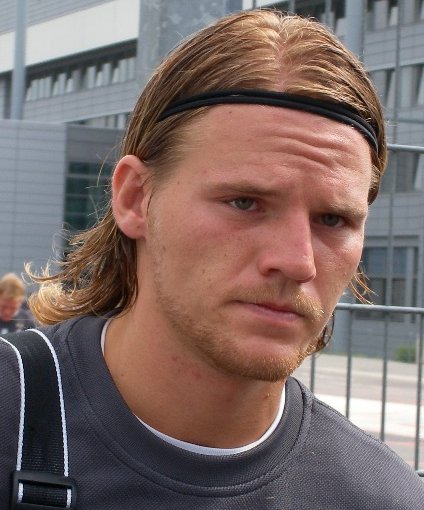
Eugen Polanski, born on March 17, 1986, in Sosnowiec, Poland, built a professional football career spanning over 15 years, predominantly in Germany. Standing 1.83 meters tall, Polanski was primarily deployed as a defensive midfielder, a role he fulfilled with consistent performance and tactical awareness. Though born in Poland, Polanski spent his formative years in Germany, coming through the youth ranks of Borussia Mönchengladbach. He eventually opted to represent Poland at the senior international level, earning 21 caps for his country.
Position
As a midfielder, Polanski was almost exclusively used in central holding roles. His responsibilities often included breaking up opposition attacks, shielding the defence, and initiating play from deep positions. His strength lay in his ability to read the game, intercept passes, and engage in duels, making him a reliable presence in the engine room of any team he represented. He was less known for his attacking contributions, focusing instead on the defensive solidity and structural integrity of the midfield.
Identity
Polanski's footballing identity was that of a tenacious and disciplined defensive midfielder. He was often described as a 'destroyer' or a 'ball-winner' due to his commitment to regaining possession and his robust approach to midfield battles. His leadership qualities, particularly in clubs like Mainz 05 and TSG Hoffenheim, underscored his importance beyond just his physical contributions. He was a player who valued tactical adherence and brought a sense of calm and organisation to the midfield.
Career path
Eugen Polanski's football journey began in Germany, despite his Polish heritage. He joined the youth academy of Borussia Mönchengladbach, progressing through their ranks before making his professional debut. His senior debut for Mönchengladbach came in the 2004–05 season, marking the beginning of his professional career at the highest level of German football (Bundesliga) [Transfermarkt].
Borussia Mönchengladbach (2004–2008)
After establishing himself in Mönchengladbach's first team, Polanski made 64 appearances across all competitions during his tenure. He gained valuable experience in the Bundesliga, honing his skills as a defensive midfielder. His time at the club saw him develop into a consistent performer, attracting attention from other European clubs.
Getafe CF (2008–2009)
In 2008, Polanski moved to Spain, joining La Liga side Getafe CF on a free transfer [Transfermarkt]. His spell in Spain was relatively brief, featuring in 26 league matches. While it provided him with exposure to a different style of football, his time in Spain ultimately led him back to Germany.
Mainz 05 (2009–2013)
Polanski returned to the Bundesliga in 2009, initially joining Mainz 05 on loan before making the move permanent in 2010 [Wikipedia]. It was at Mainz where he truly found his stride, becoming a pivotal player in their midfield. Over four seasons, he made 118 appearances, scoring 8 goals. His performances at Mainz solidified his reputation as a reliable and influential defensive midfielder in the Bundesliga.
TSG Hoffenheim (2013–2018)
In 2013, Polanski transferred to TSG Hoffenheim for a reported fee of €1.50m [Transfermarkt]. He continued to be a key figure, providing stability and leadership in the midfield. At Hoffenheim, he made 126 appearances, scoring 8 goals. His tenure at Hoffenheim saw him lead the team as captain, further underscoring his importance and influence within the squad. He concluded his playing career after leaving Hoffenheim in 2018.
Playing style
Eugen Polanski was a quintessential defensive midfielder, known for his robust and disciplined approach to the game. His playing style was built on a foundation of tactical intelligence, strong tackling, and an excellent work rate. He was adept at breaking up opposition attacks, often positioning himself effectively to intercept passes and win back possession in crucial areas of the pitch.
One of Polanski's standout attributes was his ability to win duels in midfield. He possessed the physical strength and timing to dispossess opponents cleanly, making him a formidable presence in the centre of the park. His defensive contributions were not solely limited to tackling; he also demonstrated good positional awareness, often shielding his back four effectively and preventing opposition players from finding space between the lines. While not known for prolific goalscoring or creative passing, his distribution was typically safe and efficient, aimed at retaining possession and transitioning the ball to more attacking players.
Polanski's leadership qualities were also a significant part of his playing style. He was an organiser in midfield, communicating constantly with his teammates to maintain shape and tactical discipline. This made him a trusted figure for his coaches, who often relied on him to be an extension of their tactical instructions on the field. Comparisons could be drawn to players like Javi Martínez or Lars Bender in their prime, known for their defensive solidity, tactical intelligence, and unwavering commitment to the team's structure rather than individual flair [FBref].
His consistency and reliability across multiple Bundesliga seasons are a testament to his understanding of the role and his ability to execute it effectively. He rarely strayed from his primary duties, ensuring that his team's defensive structure remained intact, even when under pressure.
Achievements & honours
While Eugen Polanski's career was more characterised by his consistent performances and leadership rather than a vast collection of major trophies, he was an integral part of squads that achieved significant milestones and maintained their status in top European leagues. His contributions were often foundational to his teams' success in securing league positions and avoiding relegation.
One of the notable collective achievements during his career was being a key player for Mainz 05 when they achieved strong finishes in the Bundesliga, including qualifying for the UEFA Europa League qualifying rounds. Similarly, at TSG Hoffenheim, he played a crucial role in their consistent upper-mid-table finishes and eventual qualification for UEFA club competitions.
Individually, Polanski's leadership was recognised through his role as captain at TSG Hoffenheim, a testament to his influence and respect within the squad. His consistent high-level performances in the Bundesliga for over a decade underscored his quality and reliability.
| Club | Competition | Year |
|---|---|---|
| None | — | — |
International career
Eugen Polanski represented the Poland national team at senior level, earning 21 caps. Although he played for Germany at various youth levels, including the U19 and U21 teams, he ultimately chose to switch his allegiance to his country of birth in 2011 [Wikipedia]. This decision allowed him to participate in major international tournaments for Poland.
His debut for the senior Poland team came on August 10, 2011, in a friendly match against Georgia. He quickly established himself as a regular in the national squad, bringing his experience and defensive acumen to the midfield. Polanski's most significant international involvement was his participation in the UEFA Euro 2012 tournament, which was co-hosted by Poland and Ukraine. He played in all three of Poland's group stage matches, showcasing his ability to compete at the highest international level [UEFA]. His role in the team was to provide a defensive shield in midfield, disrupting opposition attacks and contributing to the team's overall structure.
Despite Poland's early exit from Euro 2012, Polanski's performances were generally solid, highlighting his importance to the team's tactical setup. He continued to be called up for national duty until 2014, participating in various World Cup and European Championship qualifying campaigns. Throughout his international career, Polanski did not score any goals for Poland but his contributions were primarily in the defensive and organisational aspects of midfield play.
What makes Eugen Polanski stand out
Eugen Polanski stood out primarily for his exceptional tactical discipline and relentless work rate in the defensive midfield role. He possessed an uncanny ability to read the game, anticipate passes, and position himself to cut off supply lines to opposition forwards. This made him a highly effective screen in front of the defence, often nullifying creative threats from opposing teams.
Another distinguishing trait was his leadership on the pitch. Polanski was not the most vocal player, but he led by example through his consistent effort, composure under pressure, and adherence to tactical instructions. Coaches valued his ability to organise the midfield, ensuring structural integrity and preventing easy transitions for opponents. His tenure as captain at Hoffenheim underscores this quality, demonstrating his influence beyond just his individual performance.
Polanski was a central figure in our midfield, always reliable and incredibly important for the team's stability. His tactical understanding was outstanding.