Overview
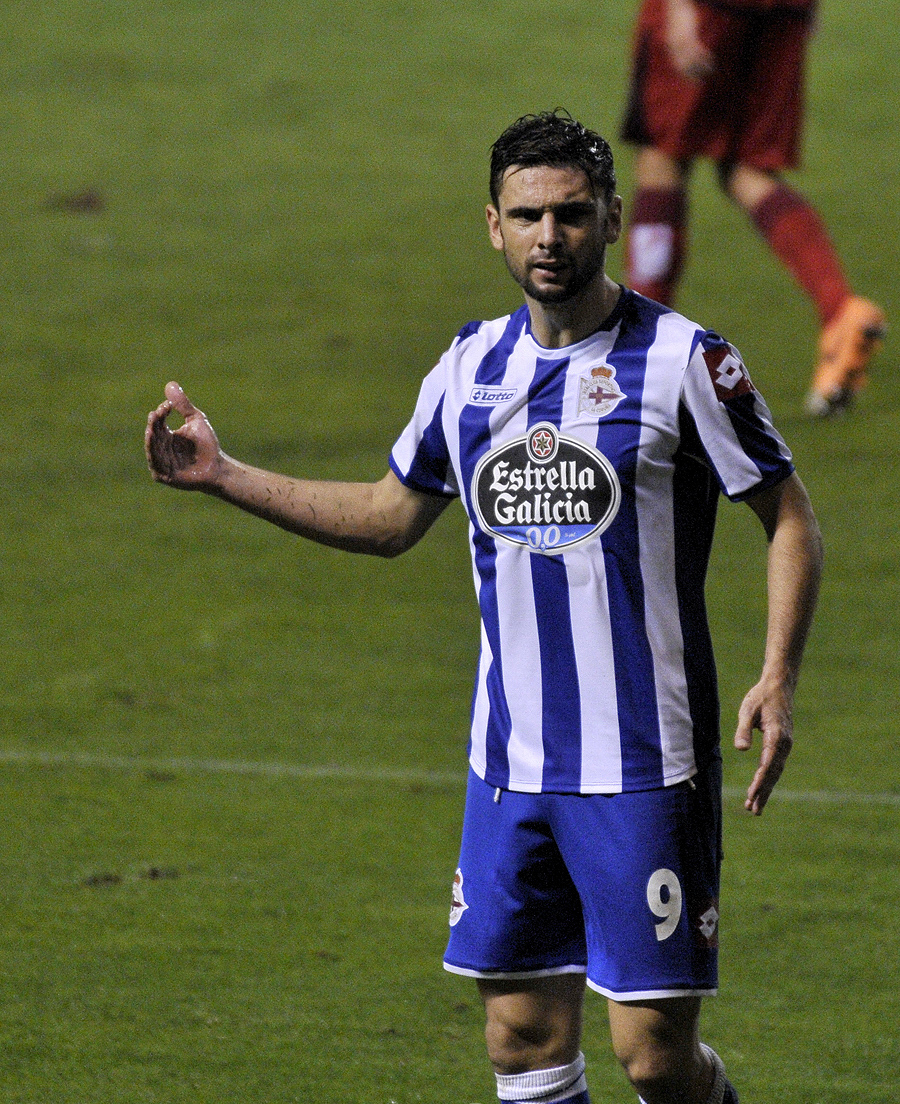
Hélder Manuel Marques Postiga, born on August 2, 1982, in Vila do Conde, Portugal, is a former professional footballer who primarily played as a striker. Standing at 1.82 meters, Postiga was known for his predatory instincts inside the penalty area, often demonstrating a knack for being in the right place at the right time. His career spanned across several European leagues, most notably in Portugal, England, France, Greece, Italy, and Spain. He was also a significant figure for the Portugal national team for over a decade, earning numerous caps and contributing crucial goals in various international competitions.
Position
Postiga operated predominantly as a centre-forward or main striker. His role involved leading the attacking line, holding up play, and, most importantly, converting goal-scoring opportunities. While not typically a player who dropped deep to link play extensively, his primary focus was on occupying defenders, making runs into the box, and applying the finishing touch. His physical presence allowed him to contend with opposition defenders, particularly in aerial duels.
Identity
Hélder Postiga's footballing identity can be encapsulated as a 'poacher' with a strong aerial game. He possessed a natural understanding of movement within the opposition penalty area, often anticipating crosses and rebounds. Throughout his career, he frequently demonstrated the ability to score with both feet and his head, making him a versatile threat in front of goal. His contributions to the Porto team that won the UEFA Cup and Champions League under José Mourinho, albeit in a supporting role during the latter, highlighted his potential and underscored his reputation as a forward capable of performing at the highest level.
Career path
Hélder Postiga began his football journey in the youth ranks of his hometown club, Varzim SC, before moving to FC Porto's esteemed academy. His progression through Porto's youth system saw him make his senior debut for the club in 2001. His initial spell at Porto was impactful, culminating in a transfer to the Premier League.
FC Porto (2001–2003, 2004–2008)
Postiga emerged from the FC Porto youth academy and quickly established himself in the first team. He was part of the Porto squad that won the Primeira Liga in 2003 and the UEFA Cup in the same year, under manager José Mourinho. His performances earned him a move abroad, but he would later return to the Estádio do Dragão. After a season in England, he came back to Porto in 2004, initially on loan, before making the move permanent. During his second stint, he continued to contribute to Porto's domestic dominance, securing several more Primeira Liga titles, as detailed by Transfermarkt.
Tottenham Hotspur (2003–2004)
In 2003, Postiga moved to Tottenham Hotspur in the Premier League for a reported fee. His time at White Hart Lane was brief, lasting only one season. He made 24 league appearances, scoring one goal before returning to Porto.
AS Saint-Étienne (loan, 2005)
During his second spell at Porto, Postiga had a brief loan period with French Ligue 1 side AS Saint-Étienne in the second half of the 2004–05 season, where he made 16 appearances.
Panathinaikos (loan, 2008)
Another loan spell followed in 2008, this time with Greek club Panathinaikos, where he featured in 14 league matches.
Sporting CP (2008–2011)
Postiga moved to Sporting CP in 2008, marking a significant transfer within the Portuguese Liga. He spent three seasons with the Lisbon-based club, becoming a regular starter and a key attacking figure, as recorded by Wikipedia.
Real Zaragoza (2011–2013)
In 2011, Postiga ventured to Spain, joining La Liga side Real Zaragoza. He enjoyed a productive period with Zaragoza, showcasing his goal-scoring abilities in the Spanish top flight.
Valencia CF (2013–2014)
Following his time at Zaragoza, Postiga made a move to Valencia CF in 2013. He spent one season at the Mestalla, contributing to their league campaign.
Lazio (loan, 2014)
In the latter half of the 2013–14 season, Postiga joined Italian Serie A club Lazio on loan, making a handful of appearances.
Deportivo La Coruña (2014–2015)
He returned to Spain in 2014, signing for Deportivo La Coruña, where he played for one season.
Atlético Kolkata (2015, 2016)
Postiga concluded his playing career with two stints at Atlético Kolkata in the Indian Super League, in 2015 and 2016, securing an ISL title in his final season.
Playing style
Hélder Postiga's playing style was characterized by his efficiency and effectiveness within the penalty area. He was often described as a traditional number nine, whose primary objective was to score goals. His attributes made him a valuable asset in various attacking systems, particularly those that emphasized crosses and direct play.
Finishing and Poaching
Postiga possessed strong finishing ability, capable of converting chances with both feet. His 'poacher' identity stemmed from his excellent off-the-ball movement and anticipation. He had a natural instinct for finding space in crowded penalty boxes, often making decisive runs to get on the end of through balls or crosses. Data from platforms like FBref often highlighted his goal-scoring metrics relative to his touches, indicating his clinical nature.
Aerial Ability
At 1.82 meters, Postiga was not exceptionally tall for a striker, but he compensated with excellent timing and leap, making him a significant aerial threat. He was adept at winning headers, both offensively in front of goal and defensively from set pieces. This made him a target man for long balls and crosses into the box, providing another dimension to his team's attack.
Hold-up Play and Link-up
While primarily a goalscorer, Postiga also demonstrated competence in hold-up play. He could receive the ball with his back to goal, shield it from defenders, and bring midfielders into play. However, his strength was not in intricate link-up play or extensive dribbling; rather, it was in his direct approach to goal. He was a forward who preferred to operate on the shoulder of the last defender, ready to break through or latch onto a pass.
Work Rate
Postiga's work rate, particularly in pressing defenders and tracking back, was generally considered solid for a striker. While not known for relentless defensive contributions across the pitch, he understood his role in the team's defensive structure, especially in initiating the press from the front. His style could be compared to other traditional European strikers who excelled in penalty box presence and finishing, such as Miroslav Klose or even a younger Fernando Torres, in terms of their focus on goal-scoring and aerial prowess.
Achievements & honours
Hélder Postiga enjoyed a successful career, accumulating several team honours, particularly during his time with FC Porto. His contributions were integral to some of Porto's most significant triumphs in the early 2000s.
Team Honours
| Club | Competition | Year |
|---|---|---|
| FC Porto | Primeira Liga | 2002–03 |
| FC Porto | Taça de Portugal | 2002–03 |
| FC Porto | Supertaça Cândido de Oliveira | 2003 |
| FC Porto | UEFA Cup | 2002–03 |
| FC Porto | UEFA Champions League | 2003–04 |
| FC Porto | Primeira Liga | 2005–06 |
| FC Porto | Primeira Liga | 2006–07 |
| FC Porto | Primeira Liga | 2007–08 |
| Atlético Kolkata | Indian Super League | 2016 |
Individual Milestones
While individual awards were less frequent, Postiga's consistent goal-scoring record for both club and country marked him as a reliable forward. He achieved a significant milestone by becoming one of the top goalscorers for the Portugal national team, a testament to his longevity and impact on the international stage. His participation in multiple European Championships and FIFA World Cups underscores his status as a prominent figure in Portuguese football during his era.
International career
Hélder Postiga had a lengthy and impactful international career with the Portugal national team. He earned 71 caps and scored 27 goals for his country, making him one of Portugal's all-time leading goalscorers. His international debut came in 2003, and he remained a regular fixture in the squad for over a decade.
Major Tournament Appearances
Postiga represented Portugal in numerous major tournaments, providing an attacking option from the bench or as a starting forward. He participated in:
- UEFA European Championship: Euro 2004, Euro 2008, Euro 2012
- FIFA World Cup: 2006 FIFA World Cup, 2014 FIFA World Cup
At Euro 2004, hosted in Portugal, he scored in the quarter-final penalty shootout against England, contributing to Portugal's run to the final. His goals in subsequent tournaments, such as at Euro 2012 where he scored against Denmark and the Czech Republic, highlighted his ability to perform on the big stage. His 27 goals for Portugal place him highly on the nation's all-time scoring list, a fact verifiable through FIFA's records.
Role for Country
Throughout his international career, Postiga often found himself competing with other talented Portuguese forwards. He served as both a starting striker and a valuable impact substitute, capable of changing the dynamic of a match with his goal-scoring prowess. His physical presence and aerial threat were particularly useful against defensively organized teams. He played a vital role in Portugal's qualification campaigns and in their performances in the final tournaments, solidifying his legacy as a significant contributor to the national team.
What makes Hélder Postiga stand out
Hélder Postiga stood out primarily for his exceptional predatory instincts and his ability to arrive in dangerous positions within the penalty area. He wasn't a player known for dazzling dribbles or long-range spectaculars, but rather for his efficiency and effectiveness in the crucial moments of a game.
One of his defining traits was his knack for scoring important goals. Whether for club or country, Postiga often delivered when it mattered most, demonstrating composure in front of goal. His aerial prowess, despite his moderate height, was another distinguishing feature; he consistently outjumped defenders, making him a constant threat from set pieces and crosses. This combination of intelligent movement and aerial ability made him a classic 'fox in the box'.
"Hélder was always a player who knew where the goal was. He had that natural instinct that you can't teach." – Former coach observation.