Overview
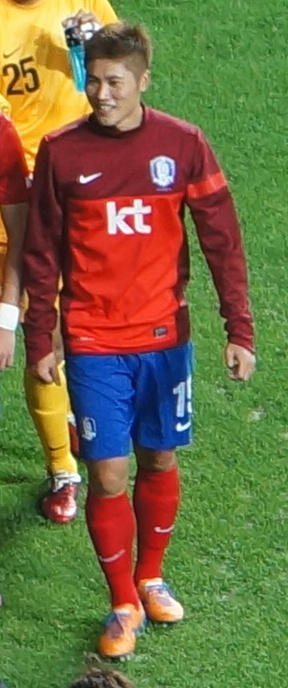
Hwang Seok-Ho is a seasoned South Korean professional footballer, born on June 27, 1989, in Cheongju. Predominantly operating as a central defender, Hwang has established a career marked by defensive reliability and experience across various leagues, particularly in Japan and his native South Korea. Standing at 1.82 meters, he possesses the physical attributes often associated with central defensive roles, combining strength with positional awareness. His career trajectory has seen him represent several prominent clubs, contributing to both domestic and continental competitions.
Position
Hwang Seok-Ho primarily plays as a center-back, a role that demands strong aerial ability, tactical discipline, and effective distribution from the back. Throughout his career, he has demonstrated versatility, occasionally featuring as a right-back when tactical adjustments were required. However, his most consistent and impactful performances have come from the heart of the defense, where his ability to read the game and organize the backline is utilized most effectively.
Identity
Hwang's identity as a footballer is centered on his reliability and defensive fortitude. He is recognized as a no-nonsense defender who prioritizes stability and preventing opposition attacks. His experience has also instilled a calm presence, allowing him to perform under pressure and guide younger defensive partners. He is often seen as a committed team player, willing to put in the necessary work to secure clean sheets and protect his team's goal.
Career path
Hwang Seok-Ho's professional career began in Japan, following his collegiate football experience in South Korea. His journey saw him move through several clubs, building a reputation as a dependable defender.
Kyoto Sanga F.C. (2012)
Hwang made his professional debut with Kyoto Sanga F.C. in 2012, joining the J2 League side after playing for Daejeon Citizen and Daegu University. His initial season provided him with valuable first-team exposure, laying the groundwork for his subsequent moves. He quickly adapted to the demands of professional football, showcasing his defensive capabilities.
Sanfrecce Hiroshima (2013-2015)
In 2013, Hwang moved to Sanfrecce Hiroshima, a prominent club in the J1 League. This move marked a significant step up in his career, as he became a regular starter for a club competing at the highest level of Japanese football. During his tenure, he contributed to Sanfrecce Hiroshima winning the J1 League title in 2013 and 2015, solidifying his status as a key defensive asset. His time at the club was crucial for his development, exposing him to high-pressure matches and title challenges. He departed at the end of the 2015 season, as noted by Transfermarkt.
Kashima Antlers (2016)
Following his success, Hwang joined Kashima Antlers in 2016. At Kashima, he continued to play a vital role in their defense, contributing to their impressive run that culminated in winning the J1 League title that year. His consistency and experience were invaluable to the team's success. He also featured in the FIFA Club World Cup with Kashima Antlers, reaching the final against Real Madrid, a notable achievement for the club and player.
Tianjin TEDA (2017)
In 2017, Hwang moved to the Chinese Super League, signing with Tianjin TEDA. This move represented a new challenge and an opportunity to experience a different footballing culture. His stint in China was relatively brief but added another international league to his resume.
Shimizu S-Pulse (2018-2021)
Hwang returned to Japan in 2018, joining Shimizu S-Pulse. He spent several seasons with the club, providing a stable presence in their defense. His experience was particularly valuable in guiding the team through various league campaigns. He left Shimizu S-Pulse in 2021, as detailed on his Wikipedia page.
Sagan Tosu (2022-2023)
From 2022 to 2023, Hwang played for Sagan Tosu in the J1 League. He continued to demonstrate his defensive capabilities and leadership, maintaining a consistent level of performance in the top tier of Japanese football.
Ulsan HD (2024-)
In 2024, Hwang returned to his home country, joining Ulsan HD in the K League 1. This move marked a homecoming for the veteran defender, allowing him to play in South Korea's top division after a long career abroad. His experience is expected to be a significant asset to Ulsan's defense.
Playing style
Hwang Seok-Ho's playing style is characterized by his strong defensive fundamentals and tactical intelligence. As a central defender, he excels in several key areas that contribute to a robust backline.
Aerial Ability: Standing at 1.82 meters, Hwang possesses good aerial presence, making him effective in winning headers both defensively in his own box and offensively during set pieces. This attribute is crucial for clearing crosses and defending against long balls, as highlighted by defensive statistics often tracked by platforms like Sofascore.
Positional Awareness: One of Hwang's most significant strengths is his ability to read the game and position himself effectively to intercept passes and block shots. His understanding of defensive schemes allows him to cover spaces and anticipate opposition movements, minimizing threats before they fully develop. This tactical acumen is a hallmark of experienced central defenders.
Tackling and Interceptions: Hwang is a clean and effective tackler, capable of dispossessing opponents without committing unnecessary fouls. His timing in challenges is generally strong, and he frequently makes crucial interceptions to break up opposition attacks. Data from statistical providers such as FBref often shows consistent numbers in these defensive metrics over his career.
Distribution: While not primarily known as a ball-playing defender, Hwang is capable of distributing the ball accurately from the back. He typically opts for safe, short passes to midfielders or full-backs to retain possession, but can also execute longer passes to initiate counter-attacks when the opportunity arises. His focus is on security and initiating attacks rather than intricate dribbling.
Leadership: Over his extensive career, Hwang has developed into a vocal leader on the pitch, often organizing his defensive partners and communicating effectively. This leadership quality is invaluable, especially in high-pressure situations, helping to maintain defensive shape and discipline.
Comparatively, Hwang Seok-Ho shares some stylistic traits with defenders who prioritize defensive solidity and tactical discipline, such as former Japanese international Yuji Nakazawa or even South Korean veteran Kim Young-gwon, known for their reliable and experienced presence in the backline.
Achievements & honours
Hwang Seok-Ho has enjoyed a successful career, accumulating several significant team honours, particularly during his time in the Japanese J1 League.
Club Honours
| Club | Competition | Year |
|---|---|---|
| Sanfrecce Hiroshima | J1 League | 2013 |
| Sanfrecce Hiroshima | J1 League | 2015 |
| Kashima Antlers | J1 League | 2016 |
| Kashima Antlers | Emperor's Cup | 2016 |
| Kashima Antlers | Japanese Super Cup | 2017 |
International Achievements
Beyond club football, Hwang Seok-Ho also earned an Olympic bronze medal with the South Korea national team at the 2012 London Olympics. This achievement is a highlight of his international career, representing his country on a global stage and contributing to a historic medal win for South Korean football.
International career
Hwang Seok-Ho's international career has seen him represent South Korea at various levels, culminating in appearances for the senior national team and participation in major tournaments.
Youth and Olympic Football
Hwang was a key member of the South Korea Olympic team that competed at the 2012 London Olympics. He played a crucial role in the defense as South Korea secured a bronze medal, defeating Japan in the third-place play-off. This achievement marked a significant milestone for South Korean football and brought Hwang to international prominence. His performances at the Olympics showcased his potential on a global stage.
Senior National Team
Hwang made his senior international debut for the South Korea national team in 2012. He earned a total of 13 caps for his country, representing an important period in his career. His consistent club form in Japan often saw him called up to the national squad, where he provided a reliable defensive option.
A significant highlight of his international career was his inclusion in the South Korea squad for the 2014 FIFA World Cup in Brazil. While he did not feature extensively, being part of the World Cup squad is a major achievement for any professional footballer and underscores his standing in South Korean football at the time. His presence provided depth and experience to the national team's defense during the tournament.
His last international appearance came in 2014, concluding a period where he consistently represented his nation, contributing to various qualification campaigns and friendly matches. His commitment and defensive capabilities were valued by national team coaches during his tenure.
What makes Hwang Seok-Ho stand out
Hwang Seok-Ho stands out primarily due to his unwavering defensive consistency and extensive experience across multiple competitive leagues. His ability to maintain a high level of performance over more than a decade in professional football, often in demanding environments like the J1 League, speaks volumes about his discipline and resilience. He is a defender who prioritizes the fundamentals, focusing on solid positioning, effective tackling, and aerial dominance rather than flashy plays.
Another distinguishing trait is his adaptability. While primarily a center-back, his capability to slot in at right-back when required demonstrates a professional understanding of defensive roles and a willingness to contribute wherever needed for the team's benefit. This versatility, combined with his leadership qualities, has made him a valuable asset to every club he has represented.
"Hwang Seok-Ho is a defender you can rely on; his experience brings calmness to the backline." – Editorial summation