Overview
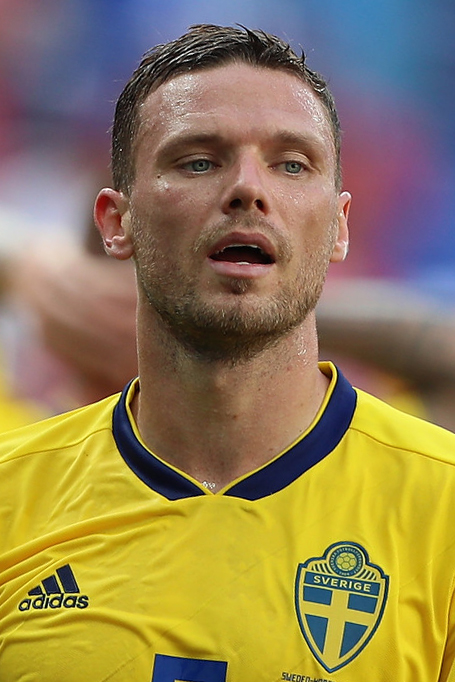
Marcus Berg is a Swedish international forward, born on 17 August 1986, in Torsby. Standing at 1.83 meters, he has established himself as a prominent goalscorer throughout his career, known for his clinical finishing and intelligent movement in the penalty area. Berg's career has seen him play in Sweden, the Netherlands, Germany, Greece, the UAE, and Russia, accumulating significant experience across diverse footballing cultures. His consistent ability to find the back of the net has been a defining characteristic, making him a reliable offensive threat for both club and country.
Position
Primarily operating as a central striker, Marcus Berg excels as a classic number nine. His role typically involves leading the line, holding up play, and providing a focal point for attacks. While his primary objective is scoring goals, Berg also contributes to link-up play, often dropping deeper to combine with midfielders or drifting wide to create space for others. His positional awareness allows him to anticipate crosses and through balls, positioning himself effectively within the opposition's penalty area.
Identity
Marcus Berg's identity on the pitch can be encapsulated as a prolific and intelligent goal poacher. He is not necessarily a player who relies on explosive pace or intricate dribbling, but rather on his sharp instincts, aerial prowess, and accurate finishing. Berg's ability to convert chances, often from seemingly innocuous positions, has made him a valuable asset to every team he has represented. His calm demeanor under pressure in front of goal is a hallmark of his play, allowing him to consistently deliver crucial goals.
Career path
Marcus Berg began his footballing journey in Sweden, progressing through local youth ranks before making his senior breakthrough. His professional career officially commenced with IFK Göteborg, where he quickly made an impression.
IFK Göteborg (2005–2007)
Berg joined IFK Göteborg as a youth player and made his senior debut in 2005. He truly came to prominence during the 2007 Allsvenskan season, where he finished as the league's top scorer with 14 goals, playing a pivotal role in Göteborg's league title triumph. This breakthrough season attracted attention from clubs across Europe, signaling his potential as a leading striker (Transfermarkt).
FC Groningen (2007–2009)
Following his success in Sweden, Berg moved to Dutch Eredivisie club FC Groningen in August 2007 for a reported fee of €2.5 million (Transfermarkt). He continued his goalscoring form in the Netherlands, scoring 15 league goals in his debut season and 17 in his second, establishing himself as one of the Eredivisie's most effective forwards (Wikipedia). His performances earned him a move to a Bundesliga giant.
Hamburger SV (2009–2013)
In July 2009, Berg transferred to German club Hamburger SV for a fee of €10 million (Transfermarkt). While his time in Germany was marked by fluctuating form and a loan spell back to the Netherlands, he still contributed to the team. During the 2010–11 season, he was loaned to PSV Eindhoven, where he rediscovered his scoring touch, netting 16 goals across all competitions. He returned to Hamburg before eventually moving on.
Panathinaikos (2013–2017)
Berg found a new lease of life in Greece, joining Panathinaikos in July 2013. His four years with the Athens-based club were highly successful. He became a fan favorite, consistently delivering goals and helping the club win the Greek Cup in the 2013–14 season (Wikipedia). He was the Greek Super League's top scorer in the 2016–17 season with 22 goals (Wikipedia), cementing his status as one of the league's premier strikers.
Al Ain (2017–2019)
After his successful spell in Greece, Berg moved to the UAE Pro League, joining Al Ain FC in July 2017. He continued his prolific scoring, winning the UAE Pro League title in his first season and finishing as the league's top scorer with 25 goals (Wikipedia). He also played a key role in Al Ain reaching the FIFA Club World Cup final in 2018.
FC Krasnodar (2019–2021)
In July 2019, Berg returned to Europe, signing for Russian Premier League club FC Krasnodar (Transfermarkt). He maintained his consistent goalscoring record, helping Krasnodar qualify for the UEFA Champions League group stage for the first time in their history during the 2020–21 season.
IFK Göteborg (2021–2024)
In 2021, Berg made an emotional return to his former club IFK Göteborg, where he continued to play until his retirement from professional football in 2024 (Transfermarkt).
Playing style
Marcus Berg's playing style is defined by his effectiveness as a traditional centre-forward. While not known for blistering pace or intricate dribbling, his intelligence, movement, and clinical finishing have consistently made him a threat in the final third. He operates primarily within the penalty area, where his instincts allow him to anticipate opportunities and react quickly to loose balls or deflections.
One of Berg's standout attributes is his aerial ability. Despite not being exceptionally tall for a striker (1.83m), he possesses excellent timing and leap, making him a significant threat from crosses and set-pieces. His ability to win aerial duels, both offensively and defensively, adds another dimension to his team's play. Data from platforms like Sofascore often highlight his effectiveness in winning headers around the box (Sofascore).
His finishing is consistently precise, whether with his left or right foot. Berg is adept at placing shots into corners, often opting for accuracy over brute force. He rarely takes unnecessary touches, preferring to strike quickly and decisively when presented with a goalscoring chance. This efficiency in front of goal is a hallmark of his game. Furthermore, his off-the-ball movement is highly intelligent. He makes clever runs into channels, pulls defenders out of position, and finds pockets of space between opposition lines, creating opportunities for himself and his teammates. He is particularly effective at ghosting in behind defenders or making late runs into the box.
Berg also contributes to link-up play. He is capable of holding up the ball under pressure, allowing midfielders to push forward, and can distribute effectively to wide players or those making runs beyond him. While not a primary playmaker, his ability to retain possession and bring others into play is a valuable asset. He can be compared to strikers like Miroslav Klose or Mario Gómez in terms of his positional intelligence and clinical finishing inside the box, rather than players who typically drop deep or operate as false nines.
His work rate, particularly in pressing defenders and closing down passing lanes, often goes unnoticed but is crucial for his team's defensive shape. He is a committed player who understands his role in the team's overall structure, even when not directly involved in attacking moves.
Achievements & honours
Marcus Berg's career has been adorned with several team trophies and individual accolades, reflecting his consistent performance as a goalscorer and a key player for his clubs.
Club Honours
| Competition | Club | Year(s) |
|---|---|---|
| Allsvenskan | IFK Göteborg | 2007 |
| Greek Cup | Panathinaikos | 2013–14 |
| UAE Pro League | Al Ain FC | 2017–18 |
Individual Honours
- Allsvenskan Top Scorer: 2007 (14 goals) (Wikipedia)
- Greek Super League Top Scorer: 2016–17 (22 goals) (Wikipedia)
- UAE Pro League Top Scorer: 2017–18 (25 goals) (Wikipedia)
Beyond these specific honors, Berg was also instrumental in Al Ain's run to the FIFA Club World Cup final in 2018, where they ultimately lost to Real Madrid (FIFA.com). His consistent goalscoring across multiple leagues underscores his quality and adaptability as a forward.
International career
Marcus Berg has had a long and distinguished international career representing the Sweden national team. He made his senior debut for Sweden in 2008 and went on to earn 90 caps, scoring 24 goals for his country (Wikipedia).
His involvement with the national team spanned over a decade, during which he was a consistent presence in the squad, often serving as the primary striker or a crucial attacking option. Berg participated in several major international tournaments:
- UEFA Euro 2016: Berg was part of the Sweden squad that competed in the UEFA European Championship in France. He featured in all three of Sweden's group stage matches (UEFA.com).
- FIFA World Cup 2018: A significant highlight of his international career was his role in Sweden's impressive run to the quarter-finals of the 2018 FIFA World Cup in Russia. Berg started in all five of Sweden's matches, playing a key role in their attack and contributing to their defensive efforts from the front (FIFA.com/WorldCup). Although he did not score in the tournament, his hold-up play, aerial presence, and tireless work rate were vital to Sweden's tactical approach.
- UEFA Euro 2020 (played in 2021): Berg also represented Sweden at UEFA Euro 2020. He featured in the group stage as Sweden topped their group before being eliminated in the Round of 16 (UEFA.com).
Berg's international career was characterized by his dedication and ability to perform on the biggest stages. His goal tally places him among Sweden's all-time leading scorers, further solidifying his legacy as a key figure for the national team.
What makes Marcus Berg stand out
Marcus Berg stands out primarily due to his exceptional goal-poaching instincts and his remarkable consistency in front of goal across multiple leagues and countries. While not always the flashiest player, his ability to arrive in the right place at the right time is a rare and highly valued attribute for a striker. He possesses a natural knack for finding space in crowded penalty areas, often anticipating deflections or passes that others might miss. This spatial awareness, combined with his clinical finishing, makes him a consistent threat.
Another distinguishing trait is his aerial prowess. Despite his height not being extraordinary, Berg's leap and timing in the air are excellent, making him a formidable target for crosses. This not only provides a direct goal threat but also allows his teams to utilize a varied attacking approach, playing long balls when necessary or delivering crosses from wide areas. His leadership and experience, particularly in later stages of his career, also made him a respected figure in the dressing room and on the pitch, often guiding younger players.
"Marcus has always been a player who delivers. He might not always get the headlines, but his goals are consistently crucial."