Overview
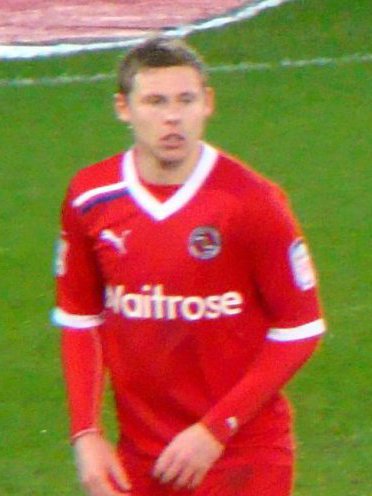
Simon Church is a Welsh former professional footballer who primarily operated as a centre-forward. Born in High Wycombe on December 10, 1988, Church embarked on a career that saw him feature for several clubs across the English Football League, most notably Reading, where he began his senior professional journey. His physical attributes and commitment to pressing made him a challenging opponent for defenders. Beyond his club commitments, Church also represented the Wales national team, earning caps and contributing goals during a significant period for Welsh football.
Position
Church’s primary role was that of a forward, specifically adept at playing as a number nine. His understanding of the position involved leading the line, providing a focal point for attacks, and holding up the ball to bring midfielders and wingers into play. While predominantly a central striker, his work rate allowed him to contribute in wider attacking roles when tactical adjustments were required.
Identity
Simon Church was characterised as a diligent and robust forward. His playing identity was built around his willingness to engage in physical contests with defenders, his aerial ability, and an energetic pressing game off the ball. He was often deployed as a target man, capable of winning headers and creating space for teammates, embodying the traditional centre-forward archetype with a modern emphasis on defensive contribution from the front.
Career path
Simon Church's footballing journey began in the youth ranks of Wycombe Wanderers before he joined the academy system at Reading. He progressed through the youth setup at Reading, signing his first professional contract with the club in 2007. His early senior career involved a series of loan spells to gain first-team experience, a common pathway for young players at larger clubs.
Loan Spells and Senior Debut
Church's initial loan destinations included Crewe Alexandra in 2007, where he made his professional debut. Further temporary moves to Yeovil Town, Wycombe Wanderers, and Leyton Orient provided him with valuable exposure to competitive senior football across different divisions. These experiences were crucial in his development, allowing him to adapt to the rigours of the professional game before consistently featuring for his parent club.
Reading Tenure
He made his senior debut for Reading in 2008 and gradually established himself in the first-team squad. His most productive period at the club came during the 2009-2010 season, where he became a more regular fixture in the side, demonstrating his goal-scoring capabilities. Church was part of the Reading squad that achieved promotion to the Premier League in the 2011-2012 season, a significant milestone in his career, though his appearances at the top level were limited (Transfermarkt).
Charlton Athletic and Later Career
Following his time at Reading, Church moved to Charlton Athletic in 2013 on a permanent transfer. He spent two seasons with the Addicks, continuing to feature regularly in the Championship. After Charlton, his career included spells at Milton Keynes Dons and a loan move to Aberdeen in the Scottish Premiership, where he enjoyed a successful period, scoring important goals. He also played for Dutch side Roda JC Kerkrade and Plymouth Argyle before ultimately retiring from professional football in 2018 due to injury concerns (Wikipedia).
Playing style
Simon Church's playing style was characterised by a combination of physical attributes and an industrious work rate. As a centre-forward, his approach was often direct, focusing on providing a presence in the opposition's penalty area and linking play. His height of 1.83 m (6 ft 0 in) contributed to his effectiveness in aerial duels, making him a viable target for long passes and crosses.
Off-the-Ball Movement and Pressing
Church was noted for his intelligent off-the-ball movement, often looking to exploit gaps between defenders or make runs into the box. Beyond his attacking contributions, a significant aspect of his game was his defensive work rate. He was known for his diligent pressing from the front, aiming to disrupt opposition build-up play and force turnovers high up the pitch. This commitment to defensive duties made him a valuable asset in systems that prioritised an aggressive forward press.
Finishing and Link-Up Play
While not an exceptionally prolific goalscorer throughout his career, Church possessed a reliable finish, particularly within the penalty area. His goals often came from close range, demonstrating good positioning and an ability to react quickly to opportunities. Furthermore, his strength and ability to hold up the ball made him effective in link-up play, allowing midfielders and wingers to join attacks. He could bring teammates into the game by laying off passes or winning flick-ons. Comparatively, his style had elements reminiscent of forwards like Glenn Murray during their Championship careers, offering a physical presence coupled with a good understanding of positional play (FBref).
Achievements & honours
Simon Church's career included notable team successes, particularly during his tenure at Reading, alongside his contributions to the Wales national team. While individual accolades were less frequent, his participation in significant club achievements and international tournaments highlights key moments in his playing career.
Club Honours
His most significant club achievement came with Reading, where he was part of the squad that secured promotion to the Premier League. This represented the pinnacle of club football in England and marked a high point in his career.
| Club | Competition | Year |
|---|---|---|
| Reading | Championship (Promotion) | 2011–12 |
International Appearances
Church also represented Wales at the UEFA European Championship in 2016, a historic tournament for the nation. Although his role was primarily from the bench, his inclusion in the squad and participation in a major international tournament represents a significant honour and a testament to his standing within Welsh football during that period (UEFA).
International career
Simon Church represented Wales at various youth levels before making his senior international debut. His journey through the Welsh national team setup culminated in earning 16 caps for the senior side, contributing three goals during his international career (FIFA).
Senior Debut and Contributions
Church made his senior debut for Wales in May 2009 in a friendly against Estonia. He quickly established himself as a forward option for the national team, often providing a different dimension to their attack with his physical presence and work rate. His goals for Wales included strikes against Scotland in a FIFA World Cup qualifier and against Finland in a friendly match, demonstrating his ability to contribute offensively on the international stage.
UEFA Euro 2016
A significant highlight of Church's international career was his inclusion in the Wales squad for the UEFA European Championship in 2016. This marked Wales' first major international tournament appearance since 1958. While he primarily featured as a substitute, his presence in the squad was vital, contributing to the team's historic run to the semi-finals. His involvement underscored his reliability and the trust placed in him by the national team management during a golden era for Welsh football.
What makes Simon Church stand out
Simon Church distinguished himself through a combination of attributes that made him a valuable asset to his teams. His primary standout trait was his exceptional work rate and commitment to pressing. Unlike many traditional forwards, Church consistently applied pressure on opposition defenders and goalkeepers, disrupting their rhythm and often initiating turnovers high up the pitch. This tireless effort off the ball was a defining characteristic of his play.
Another key aspect was his physical presence and aerial ability. Church was adept at competing for high balls, either winning flick-ons for teammates or holding the ball up to allow midfielders to advance. This made him an excellent target man, particularly when teams needed to play more directly or relieve pressure. His ability to act as a focal point allowed for diverse attacking strategies.
"Simon was a striker who gave everything for the team, tirelessly running and putting defenders under constant pressure. His commitment was second to none."