Overview
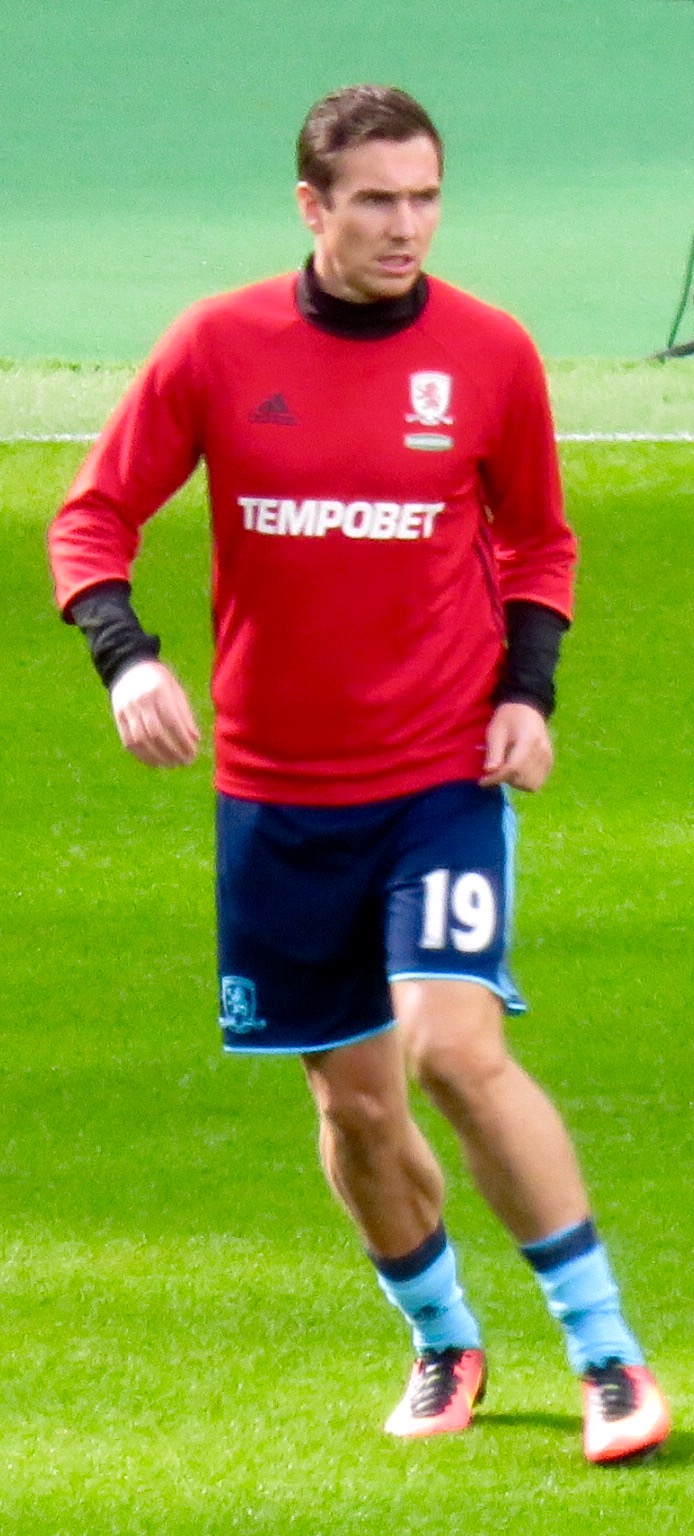
Stewart Downing is a former English professional footballer who predominantly operated on the left flank, known for his ability to provide width and deliver crosses. Born on 22 July 1984 in Middlesbrough, England, Downing carved out a senior career spanning two decades, making significant contributions across several clubs in England’s top two divisions. His career began and ended at his hometown club, Middlesbrough FC, bookending spells at clubs including Aston Villa, Liverpool, and West Ham United.
Position
Downing was primarily a left-sided midfielder or winger. Throughout his career, he demonstrated versatility, often deployed as a traditional wide midfielder tasked with hugging the touchline and delivering balls into the box. Later in his career, particularly during his second spell at Middlesbrough and with Blackburn Rovers, he also adapted to play as a more central attacking midfielder or even in a deeper central midfield role, showcasing his passing range and vision. His left foot was his dominant attribute, which he utilized effectively for crossing and shooting from distance.
Identity
Known as a "traditional winger" or "crossing specialist," Downing's footballing identity was built around his consistent wide play and delivery. He was less about prolific goalscoring and more about creating opportunities for teammates. His work rate, particularly defensively, also became a notable aspect of his game as his career progressed, ensuring he contributed to team shape beyond his attacking duties. His reliability and experience made him a valuable asset to every squad he represented, often serving as a creative fulcrum.
Career path
Stewart Downing's career began within the youth ranks of his hometown club, Middlesbrough, where he progressed through the academy system before making his senior debut. His journey encompassed multiple transfers, experiencing both Premier League and Championship football.
Middlesbrough (2001–2009)
Downing joined the Middlesbrough FC academy at a young age and made his first-team debut on 24 April 2002 against Ipswich Town in the Premier League. He established himself as a first-team regular after a brief loan spell. During his initial tenure, he was part of the Middlesbrough side that won the League Cup in 2004 and reached the UEFA Cup final in 2006. His consistent performances on the left wing made him one of the club's key players, leading to national team recognition.
Sunderland (loan, 2003)
To gain senior experience, Downing had a brief loan spell at Sunderland AFC in 2003. He made seven appearances, scoring three goals, before being recalled by Middlesbrough.
Aston Villa (2009–2011)
After Middlesbrough's relegation from the Premier League, Downing moved to Aston Villa in July 2009 for a reported fee of £10 million. He spent two successful seasons at Villa Park, where his attacking output continued to impress, contributing goals and assists from the wide areas and solidifying his reputation as a Premier League talent.
Liverpool (2011–2013)
In July 2011, Downing joined Liverpool FC for a fee reported to be £20 million. He made 91 appearances across all competitions for the Reds, winning the League Cup in 2012. Despite often playing a role in the side, he struggled to consistently replicate the goal contributions he had delivered at previous clubs, although his creative output remained.
West Ham United (2013–2015)
Downing moved to West Ham United in August 2013 for an undisclosed fee. He enjoyed a resurgence in form during his two seasons with the Hammers, often featuring in a more central, creative role under manager Sam Allardyce. His performances were instrumental in West Ham's solid league finishes.
Middlesbrough (2015–2019)
In July 2015, Downing returned to Middlesbrough, helping his boyhood club achieve promotion back to the Premier League in his first season back. He remained a key player, providing experience and creativity as the club navigated spells in both top flight and the Championship.
Blackburn Rovers (2019–2021)
Downing signed for Blackburn Rovers in June 2019, initially on a one-year deal. He extended his stay and continued to play a significant role, primarily in central midfield, before announcing his retirement from professional football in August 2021 at the age of 37.
Playing style
Stewart Downing's playing style was characterized by his left-footed technical ability, vision, and crossing prowess. Primarily a left winger, he was adept at hugging the touchline, taking on defenders, and delivering accurate balls into the penalty area.
Dribbling and Control: Downing possessed good close control and was comfortable carrying the ball at pace. While not a winger known for extravagant tricks, his dribbling was effective in creating space for crosses or shots. His ability to retain possession under pressure was a consistent feature of his game, allowing teams to build attacks from wide positions.
Crossing and Delivery: This was arguably Downing's most prominent attribute. His left-footed crosses, whether whipped in from deep or delivered with precision after beating a full-back, were a consistent source of chances. He was also a reliable set-piece taker, often tasked with corner and free-kick delivery from the left side. Statistical analysis often highlighted his high volume of successful crosses per game, showcasing his offensive impact.
Passing Range and Vision: As his career progressed and he moved into more central roles, Downing demonstrated an impressive passing range. He could spray accurate long balls to switch play and possessed the vision to unlock defenses with intricate through balls. This adaptability allowed him to continue performing at a high level even as his pace naturally diminished.
Work Rate: While primarily an attacking player, Downing also exhibited a solid defensive work rate. He tracked back diligently, supporting his full-back, and contributed to pressing schemes. This commitment to defensive duties ensured he was a well-rounded wide player, rather than solely an offensive threat.
Comparisons could be drawn to other traditional English wingers known for their crossing ability, such as Chris Waddle or a younger David Beckham, particularly in their capacity to deliver dangerous balls into the box from wide areas. His adaptability later in his career also mirrored players like James Milner, who transitioned successfully into more central roles.
Achievements & honours
Stewart Downing enjoyed a notable career, securing domestic cup success and promotion to the Premier League with his boyhood club. His contributions were instrumental in several team achievements.
Club Honours
| Club | Competition | Year(s) |
|---|---|---|
| Middlesbrough | League Cup | 2004 |
| Middlesbrough | Championship (Promotion) | 2015–16 |
| Liverpool | League Cup | 2012 |
Individual Milestones
Downing's consistent performances earned him recognition during his career. He was a regular fixture for his clubs, making over 700 professional club appearances across all competitions. His longevity in the game, particularly his ability to adapt his playing style and continue performing in the Championship until his retirement, is a testament to his professionalism and skill.
He was an integral part of the Middlesbrough side that reached the UEFA Cup final in 2006, a significant achievement for the club. While they ultimately lost to Sevilla, Downing's role in that historic run was crucial, highlighting his impact on important European nights.
International career
Stewart Downing represented England at various youth levels before making his senior international debut. His performances at club level, particularly with Middlesbrough, led to numerous call-ups for the Three Lions.
Downing made his senior debut for the England national team on 9 February 2005, coming on as a substitute in a friendly against the Netherlands. He went on to earn 35 caps for England between 2005 and 2014.
He was included in Sven-Göran Eriksson's squad for the 2006 FIFA World Cup in Germany. While he did not feature extensively, his inclusion underscored his standing as one of England's prominent wide players at the time. He featured in several qualifying campaigns for major tournaments, including the UEFA European Championship and FIFA World Cup, often providing a reliable option on the left wing.
Despite his relatively high number of caps, Downing did not score any goals for the national team. His role was primarily that of a creator, tasked with supplying crosses and supporting attacking moves rather than being a primary goalscorer himself. He was often valued for his consistent delivery and ability to provide width, offering a different offensive dimension to the squad. His final appearance for England came in a friendly against Australia in 2014.
What makes Stewart Downing stand out
Stewart Downing stood out primarily for his exceptional left-footed delivery and consistency as a traditional winger. In an era where inverted wingers became increasingly prevalent, Downing maintained his identity as a player who would hug the touchline and send in accurate crosses, making him a valuable asset for teams relying on aerial threats or late runs into the box.
His adaptability later in his career also distinguished him. The successful transition from a wide attacking role to a central midfield playmaker, particularly during his second spell at Middlesbrough and with Blackburn Rovers, showcased his footballing intelligence and technical proficiency. This evolution allowed him to extend his career at a high level, utilizing his passing range and vision to dictate play from deeper positions.
Furthermore, Downing's loyalty to Middlesbrough, returning to his boyhood club on two separate occasions, resonated strongly with fans and highlighted a deep connection to his roots. He was part of significant moments for the club, including their League Cup win and a UEFA Cup final appearance, cementing his status as a club legend.
"Stewart Downing's consistency with his left foot and ability to deliver crosses was always his standout quality. He reliably produced quality from wide areas." — Former manager Sam Allardyce