Why look at similar players to Franz Beckenbauer
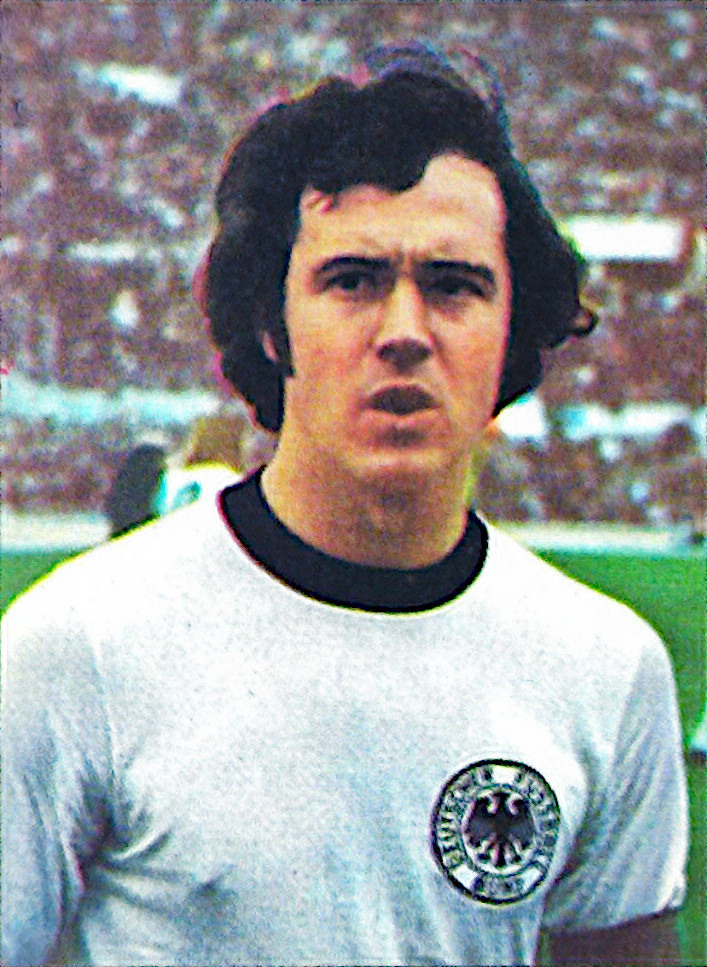
Franz Beckenbauer, known as “Der Kaiser,” redefined the role of a defender in football. Active from 1964 to 1983, he was not merely a stopper but a creative force who initiated attacks from deep within his own half [1]. His primary position was that of a libero, or sweeper, a role he is credited with inventing in its modern form. This position allowed him to drop behind the main defensive line, sweep up loose balls, and then carry the ball forward, dictating play with his exceptional passing range and vision.
Beckenbauer's defining traits included his elegance on the ball, tactical intelligence, and natural leadership. He possessed a remarkable ability to read the game, intercept passes, and then transition seamlessly into attack, often scoring crucial goals. Fans and scouts looking for comparable players to Beckenbauer seek individuals who exhibit similar qualities: defensive acumen combined with offensive contribution, often from a central defensive or deep-midfield position. This includes players who are comfortable carrying the ball out of defense, possess excellent passing and vision, and have a significant influence on their team's build-up play. While pure sweepers are rare in contemporary football, the principles of Beckenbauer's play — a defender who is also a primary playmaker — can be observed in various modern roles, from ball-playing center-backs to deep-lying defensive midfielders who drop between defenders.
His influence extended beyond his playing style; Beckenbauer led West Germany to a FIFA World Cup victory as captain in 1974 and as manager in 1990, a feat only achieved by two other individuals in history [2]. This dual success highlights his profound understanding of the game, both on and off the pitch. When comparing players, it's not just about replicating his specific position but identifying players who embody his tactical intelligence, technical excellence, and ability to elevate their team's performance through their unique skillset.
Similar players ranked
-
1. Ronald Koeman — The Goalscoring Libero
Who he is: Ronald Koeman is a Dutch former professional footballer and manager, best known for his time at PSV Eindhoven and FC Barcelona. He was a versatile player, primarily operating as a sweeper or defensive midfielder, renowned for his powerful long-range shots and exceptional free-kick abilities. Koeman holds the record for the most goals scored by a defender in football history, with 253 goals in 763 games [3].
Why he compares to Franz Beckenbauer: Koeman shares Beckenbauer's tactical intelligence and ability to initiate attacks from deep. Like Beckenbauer, he was a libero who wasn't confined to defensive duties but actively pushed forward, dictating play with his passing and posing a direct goal threat. Both players were leaders on the pitch, comfortable carrying the ball out of defense, and possessed a unique blend of defensive solidity and offensive flair. Koeman's vision and ability to spray passes across the field from a deep position mirror Beckenbauer's influence on build-up play.
Where they differ: While both were prolific goalscorers from defense, Koeman's goals often came from set-pieces and powerful long-range efforts, whereas Beckenbauer was more prone to scoring through surging runs from midfield. Beckenbauer's elegance and dribbling ability were arguably more pronounced in open play, allowing him to bypass opponents with ease. Koeman was perhaps more physically imposing, relying on strength and shooting power, while Beckenbauer's game was built on finesse, anticipation, and effortless control. According to Transfermarkt, Koeman had 78 international caps for the Netherlands, scoring 14 goals, demonstrating his significant impact at the international level, similar to Beckenbauer's 103 caps and 14 goals.
-
2. Matthias Sammer — The Modern Kaiser
Who he is: Matthias Sammer is a German former professional footballer who played as a defensive midfielder or libero. He is one of the few players to have won the Ballon d'Or while playing primarily as a defender, achieving the honor in 1996 [4]. Sammer was known for his leadership, tactical versatility, and powerful presence on the field, most notably with Borussia Dortmund.
Why he compares to Franz Beckenbauer: Sammer is perhaps the closest modern German equivalent to Beckenbauer in terms of role and influence. He excelled as a libero, reading the game expertly from behind the defense, intercepting passes, and then launching attacks. His ability to carry the ball forward, distribute with precision, and even score crucial goals from deep positions mirrored Beckenbauer's attacking contributions. Both players were central to their team's structure, acting as both defensive anchor and offensive catalyst. Sammer's leadership qualities, culminating in captaining Germany to UEFA Euro 1996 glory, also draw a strong parallel to Beckenbauer's captaincy during the 1974 World Cup.
Where they differ: Sammer's playing style was often described as more aggressive and combative than Beckenbauer's elegant approach. While both were technically gifted, Sammer brought a more direct, energetic intensity to his game, often breaking up play with robust tackles before instigating counter-attacks. Beckenbauer, while capable of physicality, was more renowned for his graceful movement and seemingly effortless control. Sammer's career was also unfortunately cut short due to injury, limiting his overall longevity compared to Beckenbauer. FBref statistics indicate Sammer's significant defensive output and progressive passing, reflecting his two-way influence.
-
3. Gerard Piqué — The Ball-Playing Commander
Who he is: Gerard Piqué is a Spanish former professional footballer who played as a center-back for FC Barcelona and the Spanish national team. Known for his aerial ability, strong tackling, and exceptional passing range, Piqué was a cornerstone of Barcelona's and Spain's dominant eras, winning multiple La Liga and Champions League titles, as well as the 2010 FIFA World Cup and Euro 2012 [5].
Why he compares to Franz Beckenbauer: Piqué embodies the modern ball-playing center-back, a role that owes much to the evolution of the libero. Like Beckenbauer, Piqué possesses excellent vision and comfort on the ball, consistently distributing passes from the back and initiating attacks. He often steps out of the defensive line to join the midfield, dictating tempo and providing a progressive passing option. His leadership and ability to read the game from a deep position, anticipating danger and making crucial interceptions, are reminiscent of Beckenbauer's defensive intelligence. Piqué's composure under pressure and ability to maintain possession are key similarities.
Where they differ: Piqué played predominantly in a flat back-four system as a traditional center-back, not as a designated sweeper behind the defensive line. While he was integral to build-up, his primary role was still defensive marking and covering. Beckenbauer had greater freedom to roam and push into midfield, often operating as an additional midfielder. Piqué's goalscoring, while respectable for a defender, wasn't as prolific or as varied as Beckenbauer's or Koeman's, often coming from set-pieces. Sofascore data often highlights Piqué's high pass completion rates and aerial duel success, key attributes of a modern central defender.
-
4. Virgil van Dijk — The Commanding Distributor
Who he is: Virgil van Dijk is a Dutch professional footballer who plays as a center-back for Liverpool and captains the Netherlands national team. Widely regarded as one of the best defenders of his generation, he is known for his strength, leadership, aerial prowess, and exceptional passing range. Van Dijk was instrumental in Liverpool's Premier League and Champions League triumphs [6].
Why he compares to Franz Beckenbauer: Van Dijk, like Beckenbauer, is a commanding presence at the back who dictates play from deep. His long-range passing, ability to switch play, and comfort in carrying the ball out of defense are defining characteristics that echo Beckenbauer's playmaking from the back. Van Dijk's leadership and calm demeanor under pressure allow him to organize the defense and initiate attacks, much like Beckenbauer did. He possesses an exceptional ability to read the game, making crucial interceptions and tackles without excessive fouling, a testament to his defensive intelligence.
Where they differ: Van Dijk operates exclusively as a traditional center-back in a back-four, focusing on direct defensive duties within a structured system. He does not have the same freedom to roam into midfield or act as a secondary attacking midfielder that Beckenbauer did as a libero. While Van Dijk is an aerial threat and scores from set-pieces, he is not known for the same kind of surging runs or open-play goalscoring that characterized Beckenbauer's game. His primary influence is through defensive solidity and precise distribution rather than direct offensive penetration. Transfermarkt lists his detailed club appearances and international caps for the Netherlands, showcasing his consistent high-level performance.
-
5. Sergio Ramos — The Modern Defender-Leader
Who he is: Sergio Ramos is a Spanish professional footballer who plays as a center-back. Renowned for his aggressive tackling, aerial ability, and leadership, Ramos has achieved immense success with Real Madrid and the Spanish national team, including multiple Champions League titles and two European Championships, plus a World Cup [7].
Why he compares to Franz Beckenbauer: Ramos shares Beckenbauer's exceptional leadership qualities and his ability to influence both ends of the pitch. He is a defender who often pushes forward, particularly in crucial moments, and has an impressive goalscoring record for a center-back, often from headers or penalties. His comfort on the ball and ability to play accurate long passes are also reminiscent of Beckenbauer's playmaking from defense. Both players possessed an undeniable presence and a will to win that inspired their teammates.
Where they differ: Ramos's playing style is significantly more aggressive and physical than Beckenbauer's. While Beckenbauer was elegant and rarely resorted to cynical fouls, Ramos is known for his robust challenges and disciplinary record. Ramos operates as a traditional center-back, whereas Beckenbauer was a libero with more freedom to roam. Furthermore, Beckenbauer's offensive contributions were more about orchestrating play and driving forward with the ball, while Ramos's attacking output often comes from set-pieces or late pushes into the box. FBref statistics for Ramos highlight his defensive actions and aerial dominance.
Side-by-side comparison
| Player | Position | Era | Main Club(s) | International Caps | Notable Trait |
|---|---|---|---|---|---|
| Franz Beckenbauer | Defender (Libero) | 1964-1983 | Bayern Munich | 103 | Invented modern sweeper role; 2x Ballon d'Or |
| Ronald Koeman | Defender (Sweeper/DM) | 1980-1997 | Barcelona, PSV | 78 | Most goals by a defender (253) |
| Matthias Sammer | Defender (Libero/DM) | 1986-1998 | Borussia Dortmund | 74 | Ballon d'Or winner (1996) as a defender |
| Gerard Piqué | Defender (Center-back) | 2004-2022 | FC Barcelona | 102 | Exceptional ball-playing & aerial ability |
| Virgil van Dijk | Defender (Center-back) | 2011-active | Liverpool | 68 | Commanding leader, elite passer from defense |
| Sergio Ramos | Defender (Center-back) | 2004-active | Real Madrid | 180 | Aggressive leader, prolific goalscorer from defense |
How to pick the right comparison
When seeking players comparable to Franz Beckenbauer, the choice often depends on which aspect of his multifaceted game one prioritizes. Beckenbauer was a unique blend of defensive solidity, playmaking, and leadership, making direct, one-to-one comparisons challenging. However, by breaking down his attributes, specific modern players can be identified who excel in certain areas.
- If you value elegant ball-playing and tactical intelligence from deep: Players like Gerard Piqué and Virgil van Dijk are strong candidates. Piqué, with his Barcelona upbringing, consistently demonstrated exceptional comfort on the ball and vision to initiate attacks from the back. Van Dijk offers similar qualities, albeit with a more direct passing style, and his ability to dictate play from the center of defense is a clear parallel to Beckenbauer's influence. Both are renowned for their composure and ability to read the game, minimizing defensive errors.
- If you value goal-scoring threat and offensive contribution from a defensive position: Ronald Koeman is perhaps the most direct comparison. His prolific goal tally, largely from free-kicks and powerful shots, directly echoes Beckenbauer's willingness to push forward and contribute to the attack. Similarly, Sergio Ramos, despite playing as a traditional center-back, has an extraordinary goal-scoring record for a defender, often appearing in crucial moments, showcasing a similar offensive mindset.
- If you value the modern interpretation of the libero role and leadership: Matthias Sammer stands out. As a German Ballon d'Or winner who excelled as a libero, Sammer's ability to sweep up danger and then drive his team forward with powerful runs and incisive passes is highly reminiscent of Beckenbauer. He embodied the leadership and tactical freedom that defined Beckenbauer's impact on the pitch.
- If you value overall defensive leadership and organizational skills: While Beckenbauer was a creative force, his defensive leadership was paramount. Players like Van Dijk and Ramos, both captains for club and country, demonstrate similar abilities to organize their back lines, inspire teammates, and maintain defensive discipline. Their presence alone can elevate the performance of those around them.
Ultimately, no single player perfectly replicates Beckenbauer's unique skillset and role, given the evolution of football tactics. However, these comparisons allow for a nuanced understanding of how his revolutionary style continues to influence defensive and midfield roles in the modern game.
Why Franz Beckenbauer comparisons matter
Why do scouts, fans, and journalists consistently draw comparisons between current players and legends like Franz Beckenbauer? These comparisons serve multiple purposes, offering a framework for understanding player attributes, tactical roles, and historical significance. For scouts, comparing a young talent to Beckenbauer can highlight potential in areas beyond just defensive stopping – identifying a player with the vision, passing range, and leadership to influence the game from deep positions.
For fans and journalists, such comparisons provide a narrative link between different eras of football. They help to contextualize a player's unique skillset within the broader history of the sport, appreciating how certain roles and styles have evolved. Beckenbauer's legacy as the inventor of the modern libero means that any player who exhibits similar traits – a defender who actively participates in offensive build-up, carries the ball forward, and dictates play – will inevitably be measured against his benchmark. It's a way of recognizing excellence and identifying players who transcend the traditional boundaries of their position.
Furthermore, these comparisons underscore the enduring impact of tactical innovations. Beckenbauer didn't just play a position; he defined it. Therefore, looking for players similar to him is an exercise in identifying those who possess similar tactical intelligence and versatility, those who can adapt and innovate within their roles. It often boils down to identifying players who are not just good at their job, but who elevate it to an art form, much like Beckenbauer did.
"Franz Beckenbauer was an exceptional player, a unique talent, and his influence on the game was immense. He was a pioneer, and his legacy continues to inspire generations." – Uli Hoeneß, former Bayern Munich President [8]