Overview
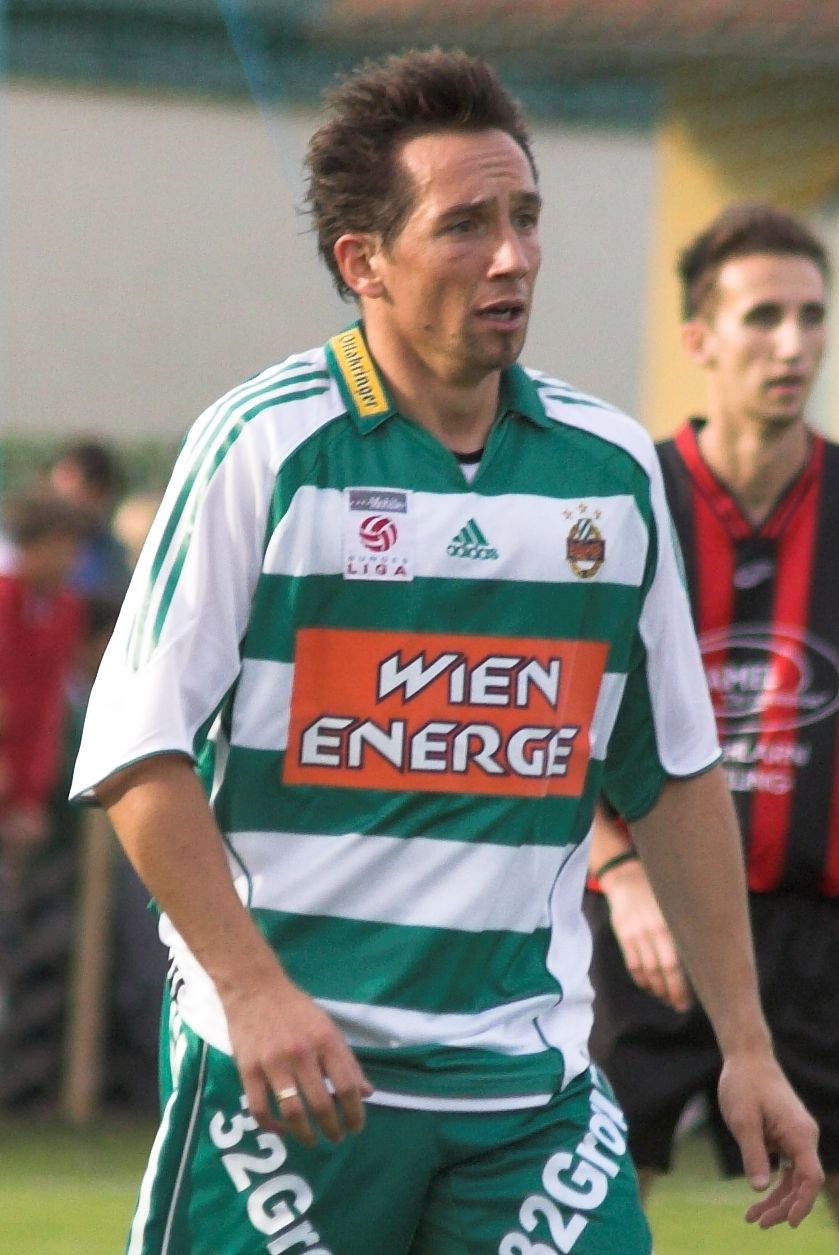
Matthias Dollinger, born on April 13, 2005, in Graz, Austria, is a professional footballer who has emerged as a promising defensive talent. Hailing from a country with a rich footballing tradition, Dollinger has progressed through the youth ranks with a focus on developing a robust and technically sound game. His early career has been marked by consistent development and an increasing integration into competitive football environments, showcasing his potential as a future mainstay in defensive roles.
Position
Dollinger primarily operates as a defender, a role that demands both physical presence and tactical intelligence. While specific data on his preferred defensive position (e.g., centre-back, full-back) is not extensively detailed, his general classification as a defender suggests a player capable of contributing to various aspects of a team's back line. Modern defenders are often required to be versatile, capable of defending against diverse attacking threats, initiating build-up play, and maintaining disciplined positioning. His development pathway would likely have emphasized these core defensive competencies.
Identity
Matthias Dollinger's identity on the pitch can be characterized by his disciplined approach and foundational defensive attributes. As a player still in the early stages of his senior career, his profile is that of a developing defender focused on consistency and tactical adherence. His Austrian background often correlates with players known for their work rate and organizational skills, traits that would be crucial for a young defender aiming to establish himself at higher levels of the game. Dollinger represents the next generation of Austrian defensive talent, with potential to grow into a more prominent role within club and international football.
Career path
Matthias Dollinger's footballing journey began in his native Austria, where he would have been nurtured through local youth academies in Graz, his birthplace. The Austrian football system is known for its strong emphasis on youth development, providing a structured environment for young players to hone their skills from an early age. These academies typically focus on technical proficiency, tactical understanding, and physical conditioning, all crucial elements for a developing defender.
While specific details of his youth clubs are not widely published, it is common for promising talents in Austria to progress through regional clubs before potentially moving to larger domestic or international teams. The transition from youth football to senior football is a critical phase, often involving appearances for reserve teams or loan spells to gain competitive experience. This period allows players to adapt to the increased physicality and pace of professional matches, refining their decision-making under pressure.
Information regarding Dollinger's senior debut and subsequent club moves is currently limited. However, the typical trajectory for an Austrian defender of his age involves making a professional debut within the Austrian Bundesliga or Erste Liga, before potentially attracting interest from clubs in more prominent European leagues. Clubs often monitor young talents closely, looking for players who demonstrate both potential and consistency.
The absence of extensive public records on his transfers or senior club tenures suggests that Dollinger is either still developing within a youth or reserve setup, or has recently made a low-profile transition into a senior team. Players at this stage are often focused on consolidating their place in a first-team squad, gaining regular playing time, and contributing to their team's objectives. Transfermarkt, a widely recognized source for player transfers and career histories, would typically list any official club moves and associated dates once they occur at a professional level Matthias Dollinger profile on Transfermarkt. As his career progresses, more detailed information on his club affiliations and transfer history is expected to become available.
Playing style
Matthias Dollinger, as a defender, exhibits a playing style centered on fundamental defensive principles, combined with an understanding of modern tactical demands. While specific statistical data from platforms like FBref or Sofascore is not yet widely available for his early career, his role inherently requires a specific set of attributes.
His primary responsibilities would include effective man-marking, anticipating opposition movements, and executing timely tackles and interceptions. A defender's spatial awareness and ability to read the game are paramount, allowing them to cut off passing lanes and position themselves to block shots or clear danger. Dollinger's development would have focused on these core skills, ensuring he can reliably contribute to his team's defensive solidity.
In terms of distribution, modern defenders are increasingly expected to be comfortable on the ball. This involves accurate short and long passing to initiate attacks from the back, breaking lines, and maintaining possession under pressure. While his primary position is defender, the exact level of his ball-playing ability would depend on his specific role within a team's tactical structure. For example, a centre-back in a possession-based team would have different demands than one in a more counter-attacking outfit.
Comparisons for young Austrian defenders often draw parallels to players known for their discipline and tactical intelligence, such as Stefan Lainer or Martin Hinteregger in their earlier careers, though these are established senior players. Dollinger's potential trajectory suggests a player who prioritizes defensive solidity and tactical discipline, aiming to be a reliable component of his team's defensive unit. His height of 1.76 m, while not exceptionally tall for a central defender, is suitable for a full-back or a centre-back who relies more on positioning and timing than sheer aerial dominance, though aerial duels would still be a key aspect of his game.
Achievements & honours
Matthias Dollinger, being in the formative stages of his professional career, is currently focused on establishing himself at senior level and contributing to his team's immediate objectives. As such, comprehensive lists of senior team trophies or individual accolades are not yet extensively documented. The early years of a footballer's career are typically dedicated to gaining experience, making a mark in youth competitions, and securing a place within a first-team squad.
It is common for young players to accumulate honours at youth academy levels, participating in national youth leagues, cups, or international tournaments. These experiences are vital for development but are distinct from senior professional honours. As Dollinger progresses, his achievements will likely expand to include club titles in domestic leagues or cups, and potentially international recognition with the Austrian national team.
The journey to accumulating major honours often requires sustained performance at the highest level, consistent playing time, and participation in successful teams. For a defender, individual recognition often comes in the form of inclusion in team of the season selections, or awards for defensive performances over a campaign. As of May 2026, Dollinger's career is still unfolding, with significant opportunities ahead to secure both team and individual honours.
| Competition | Club | Year(s) |
|---|---|---|
| To be confirmed | To be confirmed | To be confirmed |
International career
Matthias Dollinger, as an Austrian national, is eligible to represent the Austria national football team. His international career would typically begin at the youth levels, representing Austria in various age-group competitions. These youth international appearances are crucial for a player's development, exposing them to different playing styles and preparing them for the demands of senior international football.
The Austrian Football Association (ÖFB) has a structured pathway for youth international players, with teams ranging from U15 to U21. Participation in UEFA European Championship qualifiers and tournaments at these levels provides valuable experience and showcases emerging talents to national team selectors. While specific details of Dollinger's youth international caps are not readily available, it is a standard part of the progression for promising Austrian players.
The ultimate goal for any national team player is to earn a senior call-up. For Austria, competition for defensive positions is robust, with established players and other emerging talents vying for spots. A senior international debut depends on consistent club form, tactical suitability, and the national team coach's selection preferences. Major tournaments such as the FIFA World Cup or UEFA European Championship represent pinnacles of international football, and players typically need to have established themselves at club level and gained significant senior international experience to be considered for such squads FIFA World Cup official site.
As of May 2026, Dollinger's senior international career is likely still in its nascent stages, with potential for future call-ups if his club performances merit selection. His development at club level will be a key factor in determining his trajectory within the Austrian national team setup.
What makes Matthias Dollinger stand out
Matthias Dollinger's standout qualities as a defender are rooted in his foundational understanding of defensive positioning and his consistent application of tactical instructions. In an era where defenders are increasingly scrutinized for their technical ability, Dollinger's strength lies in his reliability and disciplined approach to his role. He is likely a player who prioritizes nullifying opposition threats and maintaining defensive shape, contributing to a stable backline.
Another distinctive trait could be his adaptability. Depending on his specific defensive role, his ability to seamlessly transition between different tactical setups or cover multiple defensive positions would significantly enhance his value to a team. This versatility is a highly sought-after attribute in modern football, allowing coaches greater flexibility in squad selection and in-game adjustments.
While specific signature moments are yet to be widely recorded in his early career, his consistent development trajectory suggests a commitment to continuous improvement. His focus on the core tenets of defending – tackling, interception, and aerial duels – combined with an evolving understanding of ball distribution, positions him as a defender with a solid all-round game.
"A young defender focused on the fundamentals, with potential to develop into a reliable presence in any backline."