Why look at similar players to Pelé
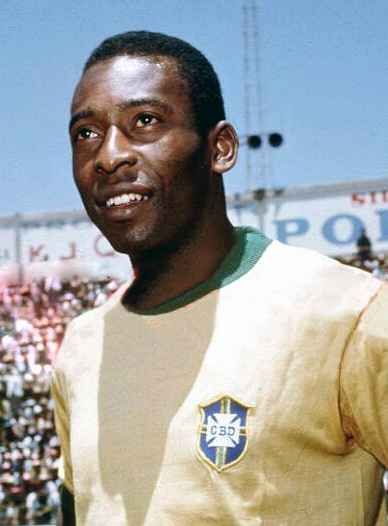
Pelé, born Edson Arantes do Nascimento, is a foundational figure in football history, often cited as the greatest player of all time. His career spanned from 1956 to 1977, predominantly with Santos FC and the Brazil national team, where he famously won three FIFA World Cups (1958, 1962, 1970) FIFA World Cup 1970 overview. Pelé operated primarily as a forward, capable of playing as a center-forward, second striker, or even an attacking midfielder. His playing style was characterized by an extraordinary blend of technical skill, athleticism, vision, and prolific goal-scoring.
Scouts, analysts, and fans look for specific traits when identifying players comparable to Pelé. These include exceptional dribbling ability, enabling him to evade multiple defenders; powerful and accurate shooting with both feet; remarkable heading prowess despite his height; and an innate understanding of the game that allowed him to create chances for teammates as well as finish them. Pelé's ability to perform consistently at the highest level, deliver in crucial moments, and adapt his game over two decades are also key factors. His physical strength, balance, and quick acceleration made him a formidable opponent, while his sportsmanship and leadership qualities further cemented his legendary status. When seeking similar players, the focus is often on individuals who combine these multifaceted offensive attributes with a significant impact on team success and a global presence in the sport.
Similar players ranked
-
1. Lionel Messi — The modern-day wizard with unparalleled dribbling and vision
Lionel Messi, an Argentine forward, is frequently compared to Pelé due to his extraordinary goal-scoring record, exceptional dribbling, and playmaking abilities. Messi, currently with Inter Miami CF, operates as a right-winger, attacking midfielder, or false nine. He shares Pelé's low center of gravity, enabling remarkable close control and agility when dribbling past opponents Lionel Messi FBref statistics. Like Pelé, Messi possesses incredible vision, often dictating the tempo of attacks and providing assists. Both players have demonstrated consistent excellence over long careers and have been central to their national teams' successes, with Messi leading Argentina to the 2022 FIFA World Cup title FIFA World Cup 2022 overview. However, Messi differs in his primary role as a creator from deeper positions, often dropping back to orchestrate play, whereas Pelé was more directly involved in the final third as a scorer. Pelé also had a more pronounced aerial threat.
-
2. Diego Maradona — The Argentine icon with dazzling dribbling and individual brilliance
Diego Maradona, another Argentine forward, is perhaps Pelé's most direct historical rival for the title of greatest player. Maradona, who played primarily as an attacking midfielder or second striker, shared Pelé's incredible dribbling prowess, often embarking on solo runs that defied multiple defenders. His ability to control the ball in tight spaces and his vision for passes were comparable to Pelé's Diego Maradona Transfermarkt profile. Both players had an immense impact on their teams' performances, particularly Maradona with Argentina's 1986 World Cup victory. The key differences lie in their physicality and goal-scoring volume. While Maradona was a prolific scorer, Pelé's career goal tally is significantly higher. Pelé also exhibited greater two-footedness and aerial ability. Maradona's career was also marked by controversies off the pitch, a stark contrast to Pelé's generally unblemished public image.
-
3. Ronaldo (Brazilian) — The explosive striker with power, pace, and clinical finishing
Ronaldo Luís Nazário de Lima, commonly known as Ronaldo, is a Brazilian forward whose peak physical and technical attributes drew comparisons to Pelé's explosive power and clinical finishing. Ronaldo, a true center-forward, possessed blistering pace, incredible dribbling speed, and a devastating ability to score from almost any position Ronaldo FBref statistics. His directness and sheer force in attacking made him virtually unplayable during his prime, reminiscent of Pelé's athleticism and goal-scoring instinct. Ronaldo won two World Cups with Brazil (1994, 2002), scoring eight goals in the 2002 tournament. The main difference lies in versatility; Pelé was more of a complete forward who could drop deep and create, whereas Ronaldo was primarily a pure number nine, focused on leading the line and finishing chances. Ronaldo's career was also significantly impacted by severe knee injuries, which arguably prevented him from reaching an even higher statistical output.
-
4. Kylian Mbappé — The modern phenomenon with blistering pace and goal-scoring consistency
Kylian Mbappé, a French forward currently playing for Paris Saint-Germain, embodies many of Pelé's dynamic attacking qualities in the contemporary game. Mbappé's electrifying pace, clinical finishing, and ability to dribble past defenders at high speed are hallmarks of his play Kylian Mbappé Transfermarkt profile. Like Pelé, he has already achieved significant international success, winning the FIFA World Cup with France in 2018 FIFA World Cup 2018 overview and scoring a hat-trick in the 2022 final. His knack for scoring crucial goals and his consistent output at a young age draw clear parallels. Where Mbappé differs is in his primary role as a wide forward or sole striker in modern tactical systems, often relying on his speed to exploit spaces. Pelé, while fast, also operated effectively in congested areas and possessed a more varied passing range from central positions.
-
5. Vinícius Júnior — The Brazilian winger with dazzling dribbling and evolving end product
Vinícius Júnior, a Brazilian winger for Real Madrid, represents a contemporary player whose style of play, particularly his dribbling and flair, echoes aspects of Pelé's game. Vinícius Jr. is known for his explosive acceleration, intricate ball control, and fearless approach to taking on defenders on the left wing Vinícius Júnior FBref statistics. His ability to create chances through individual brilliance and his growing influence in big games are reminiscent of Pelé's impact. However, Vinícius Jr. is primarily a wide player who excels in one-on-one situations, whereas Pelé was more centrally involved and possessed a greater goal-scoring threat from a wider range of positions earlier in his career. While Vinícius Jr.'s finishing has improved significantly, Pelé's overall goal tally and consistency in front of goal were established at a younger age. Vinícius Jr. is still developing his all-around game, particularly his playmaking from central areas.
Side-by-side comparison
| Player | Position | Age (as of 2026-05-21) | Main Club(s) | International Caps | Notable Trait |
|---|---|---|---|---|---|
| Pelé | Forward | 85 | Santos FC, New York Cosmos | 92 | 3x FIFA World Cup winner |
| Lionel Messi | Forward | 38 | Inter Miami CF | 180+ | 7x Ballon d'Or winner |
| Diego Maradona | Forward | 65 | Napoli, Barcelona | 91 | 1986 FIFA World Cup winner |
| Ronaldo (Brazilian) | Forward | 49 | Real Madrid, FC Barcelona | 98 | 2x FIFA World Cup winner |
| Kylian Mbappé | Forward | 27 | Paris Saint-Germain | 90+ | 2018 FIFA World Cup winner |
| Vinícius Júnior | Forward | 25 | Real Madrid | 50+ | Exceptional dribbling ability |
How to pick the right comparison
When seeking a player comparable to Pelé, the selection often depends on which specific facet of Pelé's multifaceted game is being prioritized. Pelé was a complete forward, excelling in scoring, creating, and adapting to different tactical roles. Therefore, a decision-tree approach can help narrow down the most suitable comparisons.
- If you value prolific goal-scoring and consistent output: Look towards Lionel Messi or Kylian Mbappé. Both players have demonstrated an ability to score at an extraordinary rate over extended periods, often leading their leagues and international tournaments in goals. Messi's consistency across two decades and Mbappé's early career prolificacy are reminiscent of Pelé's scoring records.
- If you prioritize dazzling dribbling, individual brilliance, and game-changing moments: Diego Maradona is arguably the closest historical comparison. His ability to single-handedly win games through audacious runs and skill is legendary. In the modern game, Vinícius Júnior exhibits similar traits of beating defenders with flair and speed, though his overall output and positional versatility are still developing compared to Pelé's prime.
- If you are looking for explosive power, pace, and clinical finishing from a central forward: Ronaldo (Brazilian) is an excellent match. His directness, strength, and ability to score from any angle with both feet and his head made him a dominant force, much like Pelé's physical attributes and finishing prowess.
- If you seek a combination of versatility, athleticism, and big-game performance: Kylian Mbappé stands out. He can play across the front line, possesses incredible physical attributes, and has a proven track record of delivering in World Cup finals, a defining characteristic of Pelé's career.
Ultimately, no single player perfectly mirrors Pelé's unique blend of attributes and achievements, but these comparisons highlight specific aspects of his greatness that resonate in different eras and playing styles.
Why Pelé comparisons matter
Comparisons to Pelé serve several critical functions within football analysis, scouting, and historical discourse. For scouts and analysts, referencing Pelé's playing style provides a benchmark for evaluating young talent. It helps identify players with a similar combination of technical skill, athletic ability, vision, and goal-scoring instinct that made Pelé so dominant. Understanding which attributes are shared can guide player development and tactical deployment.
For fans and journalists, these comparisons enrich the narrative of the sport. They allow for intergenerational debates, helping to contextualize the achievements of modern players against the backdrop of historical greats. When a player is described as having "Pelé-esque dribbling" or "Pelé-like vision," it instantly communicates a certain level of quality and style, making complex attributes more accessible and engaging for a wider audience. It also highlights the enduring influence of Pelé's legacy, demonstrating how his innovations and standards continue to shape perceptions of footballing excellence.
"Pelé was the greatest player of all time. He was complete, technically perfect, physically strong, could head the ball, shoot with both feet, and had incredible vision. He was a phenomenon." — Franz Beckenbauer Pelé Wikipedia entry