Overview
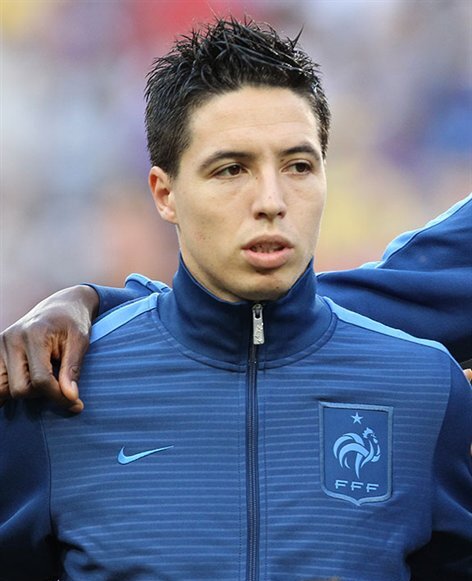
Samir Nasri is a French former professional footballer, born on 26 June 1987, in Marseille. Predominantly an attacking midfielder, Nasri was often deployed in a central role or on either flank, providing creative impetus for his teams. His career spanned several top European clubs, most notably Arsenal and Manchester City in the Premier League, where he showcased his distinctive blend of technical finesse and tactical intelligence. Representing France at various youth levels and for the senior national team, Nasri was considered one of the most promising talents of his generation.
Position
Nasri primarily operated as an attacking midfielder, a role that allowed him to influence play in the final third. His versatility meant he could also be deployed as a wide midfielder or winger, particularly on the left, from where he would often drift inside to combine with teammates or shoot. His ability to play in multiple advanced positions made him a valuable asset, adapting to different tactical systems.
Identity
Samir Nasri's footballing identity was characterized by his exceptional close control, vision, and passing range. Often described as a 'playmaker,' he possessed the ability to unlock defenses with intricate passes and incisive runs. His flair on the ball and capacity to perform under pressure marked him as a key creative force for his clubs and country during his peak years.
Career path
Samir Nasri's footballing journey began in his hometown of Marseille, progressing through the ranks of one of France's most prestigious academies. His professional career saw him move between prominent clubs in England and Europe, accumulating significant experience and honours.
Olympique Marseille (Youth & Senior: 1997–2008)
Nasri joined the Olympique Marseille youth academy at the age of nine in 1995. He made his senior debut for the club in September 2004, at just 17 years old, quickly establishing himself as a first-team regular. During his time with Marseille, he played 166 matches across all competitions, scoring 12 goals and providing 30 assists, according to Transfermarkt. His performances earned him the Ligue 1 Young Player of the Year award in 2007, attracting attention from top European clubs.
Arsenal (2008–2011)
In June 2008, Nasri completed a move to Arsenal FC in the Premier League for a reported fee of £12 million, as noted by Wikipedia. He quickly adapted to English football, becoming an integral part of Arsène Wenger's midfield. Over three seasons, Nasri made 126 appearances for Arsenal, scoring 27 goals and assisting 14. His final season at the club, 2010-11, was particularly prolific, as he netted 15 goals across all competitions.
Manchester City (2011–2017)
Nasri transferred to Manchester City in August 2011 for a fee of £25 million, a significant move that elevated his career to new heights. At City, he played a crucial role in two Premier League title triumphs (2011–12 and 2013–14), as well as winning the League Cup in 2014. He made 176 appearances for Manchester City, scoring 27 goals and registering 40 assists before departing on loan in 2016.
Sevilla (2016–2017, Loan)
During the 2016–17 season, Nasri moved to Sevilla FC on a season-long loan. He made 30 appearances for the Spanish club, scoring 3 goals and providing 3 assists, according to Transfermarkt.
Antalyaspor (2017–2018)
Following his spell at Sevilla, Nasri joined Turkish club Antalyaspor in August 2017. His tenure was brief, making 8 appearances and scoring 2 goals.
West Ham United (2019)
After a period of absence from football, Nasri returned to the Premier League with West Ham United on a short-term deal in January 2019. He made 6 appearances for the Hammers.
RSC Anderlecht (2019–2020)
Nasri then moved to Belgian side RSC Anderlecht in July 2019, reuniting with former teammate Vincent Kompany. He played 8 matches, scoring 1 goal, before leaving the club.
Retirement (2021)
Samir Nasri officially announced his retirement from professional football in September 2021.
Playing style
Samir Nasri was renowned for his technical ability, close control, and spatial awareness, making him a classic attacking midfielder. His playing style blended the elegance of a traditional number ten with the dynamism required in modern football.
Technical Attributes
- Dribbling and Close Control: Nasri possessed exceptional ball control, often able to wriggle out of tight spaces and bypass defenders with quick changes of direction. This made him difficult to dispossess and allowed him to operate effectively in congested midfield areas.
- Passing and Vision: A key aspect of Nasri's game was his vision and ability to execute incisive passes. He excelled at playing through-balls and intricate short passes that unpicked defenses. For instance, during his peak Premier League seasons, he consistently ranked among the top players for key passes per 90 minutes, as evidenced by data on platforms like FBref.com.
- Shooting: While primarily a creator, Nasri also had a powerful and accurate shot, particularly from outside the box. He was capable of scoring speculative efforts and often found the back of the net with well-placed finishes.
- Agility and Movement: His low centre of gravity contributed to his agility, allowing him to turn quickly and evade markers. Nasri's off-the-ball movement was intelligent, often finding pockets of space between the opposition's midfield and defensive lines.
Tactical Role
Nasri was often the pivot of his team's attacking play, linking midfield to attack. At Arsenal, he thrived in a system that emphasized fluid movement and technical superiority, often drifting from the wing into more central areas to combine with the likes of Cesc Fàbregas and Robin van Persie. At Manchester City, he adapted his game to a more direct, powerful approach under Roberto Mancini and later Manuel Pellegrini, contributing goals and assists from both central and wide positions. His ability to retain possession under pressure and initiate attacks was a consistent feature of his game.
Comparisons
Comparisons during his career were often drawn to other technically gifted playmakers, such as former French international Youri Djorkaeff or even a young Zinedine Zidane due to his Marseille roots and elegant style. Like Mesut Özil, another prominent creator of his era, Nasri possessed the ability to dictate the tempo of a game with his passing and movement, albeit with a slightly more direct dribbling style.
Achievements & honours
Samir Nasri enjoyed a successful career at club level, securing multiple domestic honours, particularly during his time in England. His individual performances were also recognized, especially in the early stages of his career.
Club Honours
| Club | Competition | Year(s) |
|---|---|---|
| Manchester City | Premier League | 2011–12, 2013–14 |
| Manchester City | League Cup | 2013–14 |
| Manchester City | FA Community Shield | 2012 |
Individual Honours
- Ligue 1 Young Player of the Year: 2006–07
- PFA Team of the Year (Premier League): 2010–11
- French Player of the Year: 2010
International career
Samir Nasri represented France at various youth levels before making his debut for the senior national team. His international career was marked by periods of significant contribution alongside notable absences from major tournaments.
Youth Representation
Nasri was a key player for France's youth teams, notably winning the 2004 UEFA European Under-17 Championship. He captained the team and scored the winning goal in the final against Spain, highlighting his early promise and leadership qualities, as detailed by Wikipedia.
Senior National Team (2007–2013)
Samir Nasri made his senior debut for the France national team on 28 March 2007, in a friendly match against Austria. He went on to earn 41 caps for his country, scoring 5 goals during his international career, according to FIFA's official player profile.
Major Tournament Appearances
- UEFA Euro 2008: Nasri was part of the French squad that participated in the tournament held in Austria and Switzerland.
- UEFA Euro 2012: He featured prominently in France's campaign, scoring a memorable goal against England in the group stage.
Despite his talent, Nasri was controversially omitted from France's squad for the 2010 FIFA World Cup and the 2014 FIFA World Cup. His international career effectively ended after Euro 2012 following a series of disagreements and disciplinary issues, leading to his self-imposed international retirement in 2014.
What makes Samir Nasri stand out
Samir Nasri stood out for his blend of technical sophistication and streetwise intelligence on the pitch. His ability to perform intricate dribbles in confined spaces and release accurate through-balls under pressure was a hallmark of his game. He possessed a rare capacity to slow down the play when needed, then accelerate with a burst of pace or a killer pass, dictating the offensive rhythm of his team.
One of his most distinctive traits was his ambidexterity, making him comfortable on either foot and capable of shooting or passing with equal effectiveness from various angles. This made him unpredictable for defenders and allowed him to operate with fluidity across the attacking midfield line. His goal against England in Euro 2012, a precise low drive, exemplified his composure and finishing ability on the big stage.
"Samir is a real football player. He is technical, he sees the game, he is agile and he is quick." – Arsène Wenger